
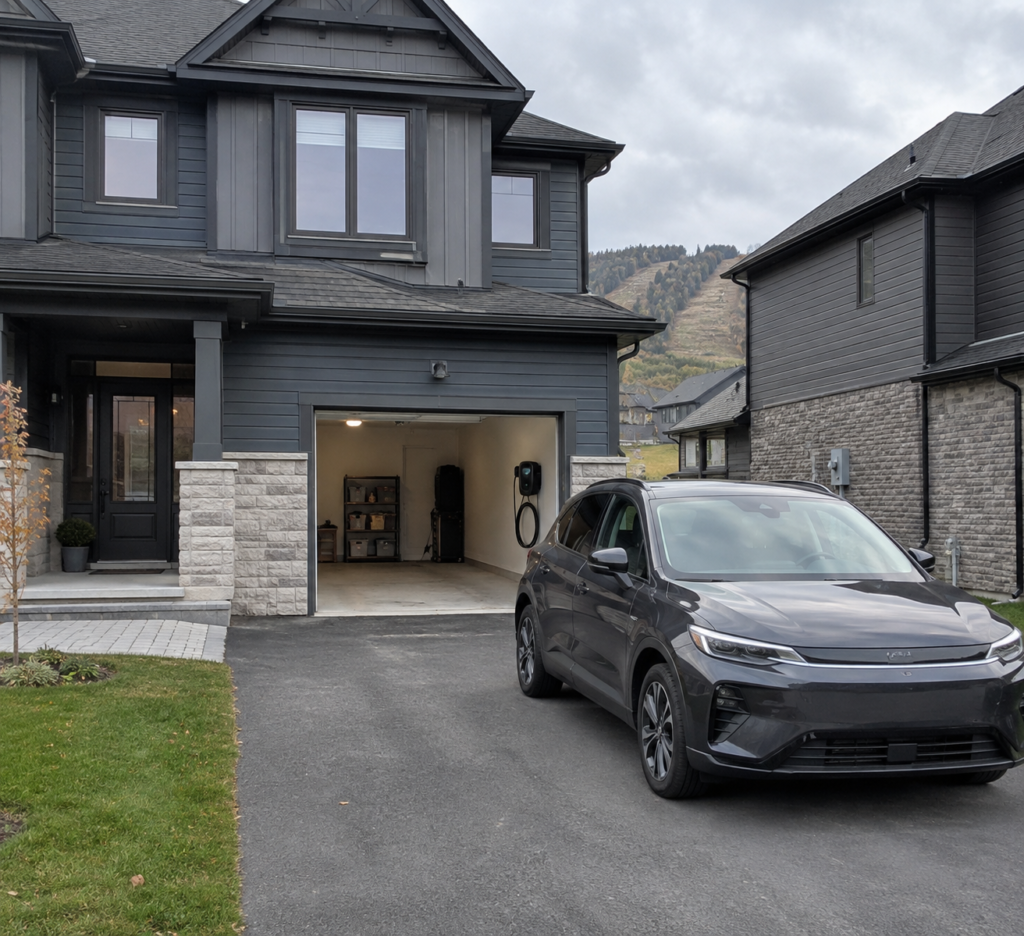
EV charger installation in Collingwood depends on the type of property, the parking setup, the electrical capacity, and who has authority over the space where the charger will be installed.
For buyers and owners in new condos, townhomes, and detached developments, the first step is not choosing the charger. The first step is confirming whether the panel, parking area, routing path, approval process, and metering setup can support the charger safely.
Start With the Type of Property
A detached home, a freehold townhome, and a condominium with shared parking can all need different EV charger planning. The charger may look similar once installed, but the approval process and electrical path can be very different.
In a detached home, the review usually starts with the electrical panel, garage or driveway location, charger size, wire route, and whether the service can support a Level 2 charger. The owner usually has more control over the installation once code and permit requirements are handled.
A townhome can be more complicated. Some townhomes are freehold with private garages and direct panel access. Others involve shared elements, condo rules, exterior restrictions, or parking areas that are not fully controlled by the unit owner.
Condo and shared-parking properties need the most careful approval process. Parking ownership, common elements, condo-board approval, metering, cable routing, and building capacity can all affect whether the charger can be installed and how the cost is assigned.
Safety Tip: Do Not Treat Every Parking Space the Same
A deeded parking space, assigned space, private garage, visitor space, and common-element parking area can each create a different approval path. Confirm ownership and condo rules before planning the electrical work.
Detached-Home EV Charger Installation in Collingwood
Detached-home installations are often the most direct. The charger is usually installed in a garage or outside near the driveway, with a dedicated circuit running from the home’s panel.
That does not mean every detached home is automatically ready. The panel still needs to be reviewed. The home’s service size, existing electrical loads, breaker space, wire route, and charger output all affect the installation.
For detached homeowners, EV charger installation in Collingwood should be planned around the actual vehicle, daily driving needs, and where the car will sit overnight. A Level 2 charger works best when placement, panel capacity, and cord reach are all considered together.
Newer detached developments around Collingwood may offer stronger electrical starting points than older homes, but the actual property still needs to be checked. A modern panel does not automatically mean enough capacity is available for the charger size the owner wants.
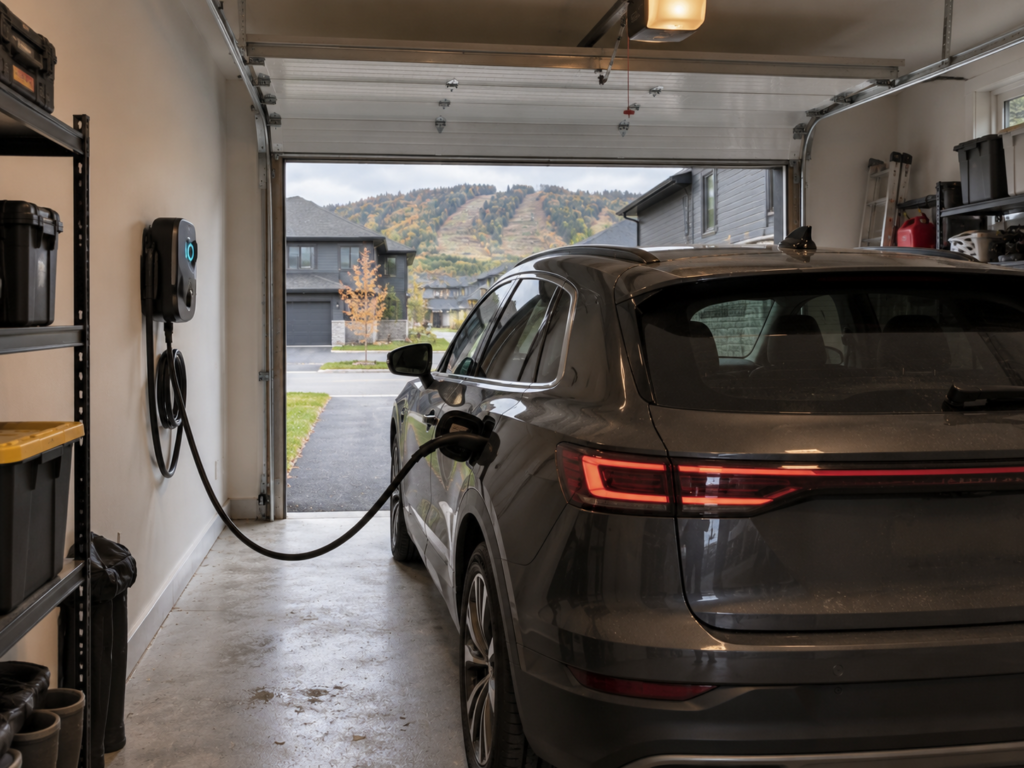
Townhome EV Charger Planning
Townhomes need a more detailed look because the electrical and ownership setup can vary. Some townhomes have private panels inside the unit and an attached garage with a clean route for wiring. Others may have shared exterior areas, limited access, or condo-style governance.
The first question is where the charger will be installed. A private attached garage is usually simpler than an exterior parking space. If the charger needs to be mounted on an exterior wall, the property rules may affect what can be changed.
The second question is how the wire will reach the charger. A clean path from the panel to the garage can keep the project more practical. A finished basement, shared wall, exterior route, or limited utility access can increase the scope.
Townhome owners should also confirm whether the charger will be used by one vehicle only or whether a second EV may be added later. Planning one charger without thinking about future parking and charging habits can create another electrical review sooner than expected.
Local Tip: New Does Not Always Mean EV-Ready
Collingwood has a mix of new detached homes, freehold townhomes, condo townhomes, and multi-unit developments. The label “new” does not confirm charger capacity, cable routing, approval status, or metering.
Shared-Parking and Condo Installations
Shared-parking installations require more coordination. The owner may need approval from the condo board or property manager before any electrical work can begin.
The board may review the proposed charger location, electrical route, building capacity, contractor requirements, insurance, maintenance responsibility, ownership, and how electricity use will be billed. Some buildings may already have an EV charging policy. Others may need to review the request as a new application.
Parking ownership is important. If the parking space is part of the unit, the process may differ from a space that is assigned or part of the common elements. Metering also matters because the condo corporation and other owners may need a clear way to separate charger electricity from shared building costs.
Ontario condo rules can support EV charging, but approval is not automatic in every situation. The board may still need professional information, cost clarity, location details, and safety confirmation before allowing work to proceed. Owners can review Ontario condominium information for broader condo-law context before submitting a charger request.
Code Tip: Condo EV Charging Needs Qualified Electrical Review
Shared buildings need careful electrical planning because one charger can affect common electrical infrastructure, routing, metering, and safety requirements. A licensed electrical review helps the owner and board understand the actual impact.
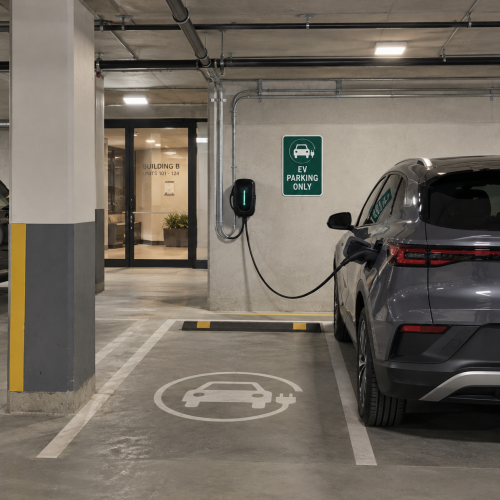
Condo-Board Approval and Parking Ownership
Condo-board approval should be treated as part of the installation timeline. The electrical work may be simple, but the approval process can still take time.
A good request should explain the charger location, parking space details, cable route, electrical source, metering plan, contractor credentials, and who is responsible for costs. The board may also want confirmation that the installation will not create safety issues, damage property, or interfere with common areas.
Owners should avoid buying equipment before confirming whether the charger can be installed where they want it. A charger that works well for a detached garage may not be the right fit for a condo parking space.
If the parking space is outside, winter access and cable management should be discussed early. A cable crossing a walkway, snow-clearing path, or common driveway can create practical and safety concerns.
Metering and Electricity Use
Metering is one of the biggest differences between a detached home and a shared building. In a detached home, charger electricity usually flows through the homeowner’s meter. In a condo or shared-parking property, the electricity may come from a building system, common panel, or other shared electrical source.
That creates a fair-use question. Who pays for the electricity? How is usage tracked? Does the charger need its own meter or networked billing system? Is the power tied to the owner’s unit meter or the condominium corporation’s common expenses?
Those questions need answers before installation. A clean metering plan helps prevent disputes between owners, boards, managers, and neighbours.
In some properties, the electrical capacity may also limit how many chargers can be added. One charger may be manageable, but future demand from several EV owners can change the building-wide plan.
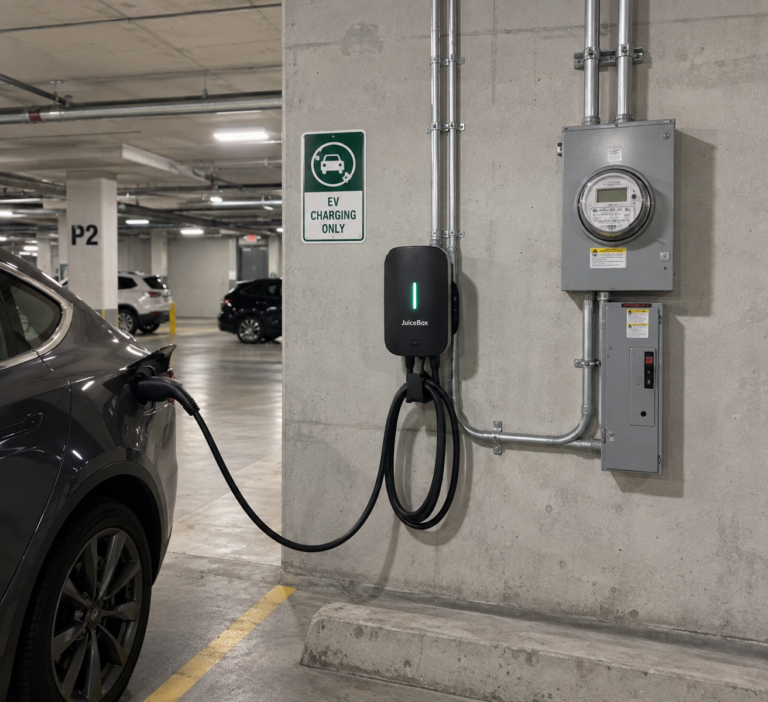
Cable Routing and Charger Location
Cable routing can make or break the installation plan. The charger has to be fed from an approved electrical source, and the wire path must be safe, protected, and acceptable for the property.
In a detached home, the wire may run from the panel through a basement, garage wall, or exterior conduit. In a townhome, the route may be affected by shared walls, finished spaces, or exterior restrictions. In a condo, routing may cross common elements, parking structures, ceilings, mechanical rooms, or electrical rooms.
The shortest route is not always the best route. The proper route must account for protection from damage, access, maintenance, fire separation, building rules, and visual impact.
For local owners who need help planning a route, our Collingwood electricians can review the panel, parking location, route options, and installation requirements before the equipment is selected.
Winter Charging in Collingwood
Collingwood weather should be part of the charger plan. Winter driving, snow clearing, cold batteries, and outdoor parking can all affect how convenient the setup feels.
A garage installation usually protects the charger and cable from direct weather exposure. Outdoor installations can still work well when the charger is rated for exterior use and the cord can be managed safely.
Owners should think about where the vehicle will park during snow events, whether the charging cable will sit under ice or snow, and whether the charger remains accessible when the driveway or parking lot is being cleared.
Winter range loss can also make Level 2 charging more valuable. A commuter or frequent driver may rely on overnight charging more heavily when cold weather reduces efficiency.
Local Development Examples in Collingwood
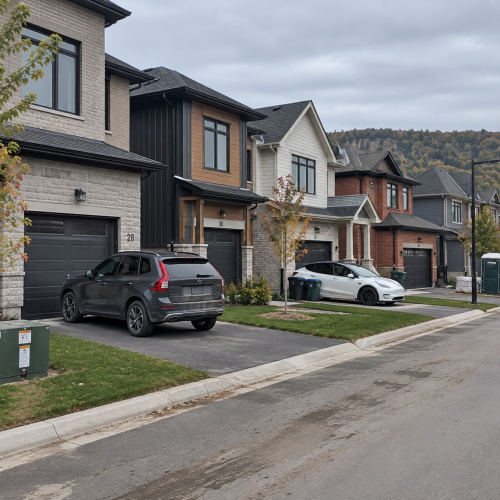
Summit View is a useful detached and townhome example because it shows how newer Collingwood housing can include a mix of property forms. A buyer in a detached home may have a different charger path than a townhome owner with shared or restricted exterior areas.
Indigo Estates is another useful example because it includes a completed community with townhome and single-family housing forms. In a setting like that, EV charger planning should still be confirmed property by property because panel location, ownership structure, and parking layout can vary.
These examples should not be used to assume charger readiness. A new home, townhome, or condo-style property should only be treated as ready after the electrical provisions, approval requirements, and parking setup have been confirmed.
For broader growth and land-use context, the Town of Collingwood planning and development page is a helpful municipal reference.
Installation Cost Factors
EV charger installation cost in Ontario depends on the charger type, panel capacity, wire distance, route complexity, indoor or outdoor placement, permits, and whether upgrades are needed before the charger can be installed.
Detached homes may be easier to estimate after a panel and garage review. Townhomes may need additional checks around routing and ownership. Condos can involve more coordination because approval, metering, and building capacity must be addressed before installation.
Owners comparing project scope can review our guide to EV charger installation cost in Ontario before requesting a quote. The cost conversation becomes clearer when the property type and installation path are understood.
Frequently Asked Questions
Possibly, but the approval process depends on the condominium rules, parking ownership, electrical capacity, metering, cable routing, and safety review. Condo-board approval should be confirmed before buying a charger or scheduling work.
Usually, yes. Detached homes often provide more control over the panel, garage, driveway, and routing path. The panel capacity and service size still need to be reviewed before a Level 2 charger is installed.
Yes, if the charger is rated for outdoor use and the installation meets electrical and property requirements. Townhome owners should also confirm exterior rules, cable location, snow-clearing paths, and whether any shared elements are involved.
That depends on the property setup. The charger may need usage tracking, separate metering, or a billing arrangement approved by the condo corporation or property manager.
It is helpful to understand the building’s process early, but an electrical review may also be needed to prepare the request properly. Many boards want technical details before making a decision.