
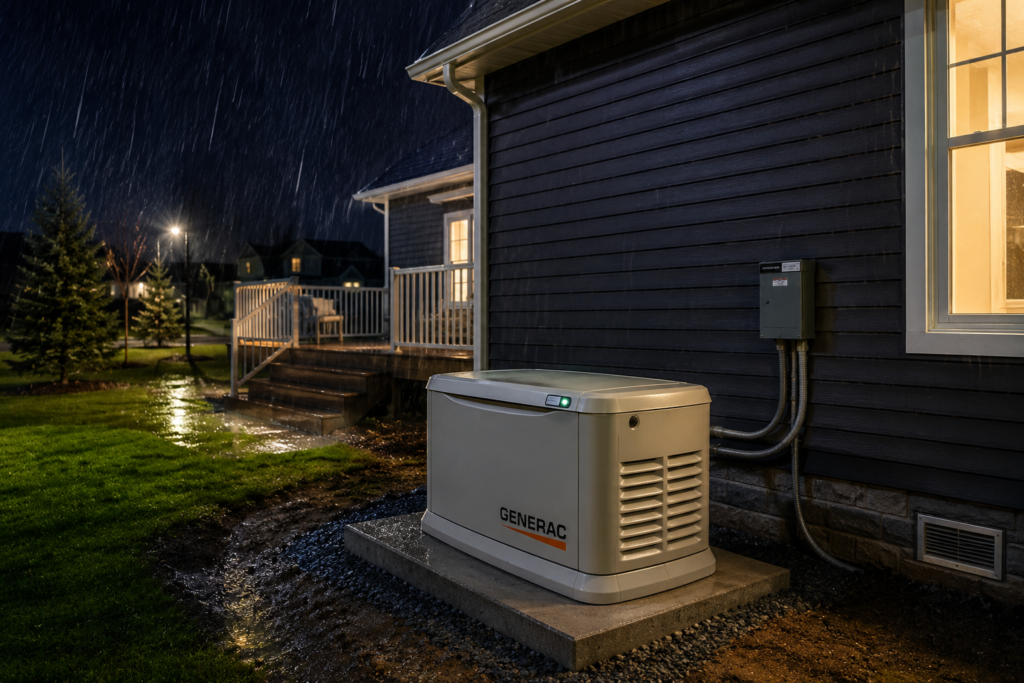
Choosing the right generator size starts with one question: what do you actually need powered when the grid goes down?
For homeowners in Barrie, Innisfil, and surrounding Simcoe County communities, generator sizing should not be based only on square footage. A smaller home with a sump pump, well pump, electric heat, and a home office may need more careful planning than a larger home with fewer essential electrical loads.
Start With the Loads You Want to Protect
A generator should be sized around the circuits and equipment that matter during an outage. Some homeowners want the basics covered. Others want most of the home to run as normally as possible.
The first step is deciding what cannot be off for long. That may include furnace controls, a sump pump, refrigerator, freezer, well pump, internet equipment, selected lighting, medical equipment, security systems, or a home office setup.
Once those priorities are clear, the generator can be matched to the real demand. This is why a load assessment matters. The home’s electrical panel, existing service, circuit layout, fuel source, and transfer equipment all affect the final recommendation.
For homeowners comparing sizing with overall project cost, our guide to whole-home generator cost in Ontario explains how size, transfer equipment, installation conditions, and fuel planning affect the total investment.
Safety Tip: Do Not Size a Generator by Square Footage Alone
Home size can give rough context, but it does not tell us what the electrical demand will be during an outage. Generator sizing should be based on actual loads, starting watts, selected circuits, and how the household uses power.
Essential-Load Generator Sizing
An essential-load generator is designed to keep the most important systems running. It is not meant to power everything in the house at the same time.
This setup often focuses on heat, sump protection, refrigeration, lighting, internet, and a few outlets. For many homeowners, that is enough to protect comfort, safety, food storage, and basic communication until utility power returns.
Essential-load planning works well when the goal is practical backup power without oversizing the system. A homeowner may decide that the oven, dryer, central air, and hot tub can stay off during an outage, while the furnace controls, sump pump, fridge, freezer, and Wi-Fi stay on.
The advantage is control. A properly planned essential-load system can be more cost-effective, easier to manage, and better matched to the home’s real priorities.
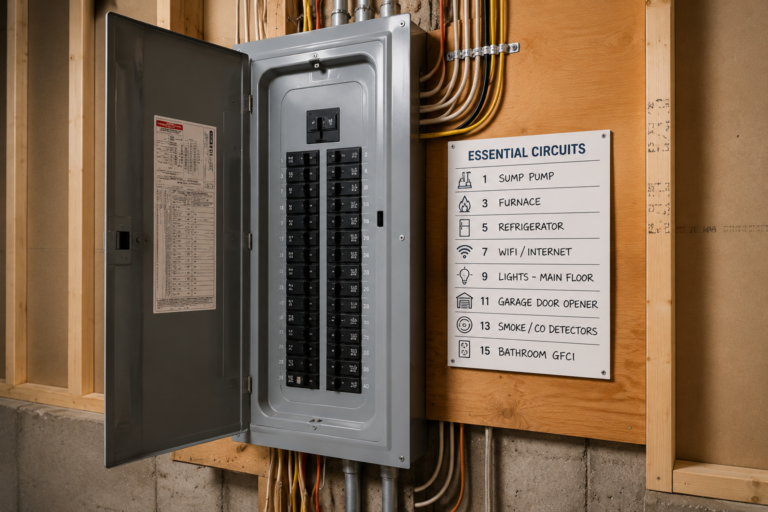
Partial-Home Generator Sizing
A partial-home generator sits between essential backup and whole-home coverage. It may support more lighting, more outlets, a home office, refrigeration, heating equipment, and selected comfort loads.
This type of setup can be a strong fit when the homeowner wants the house to remain functional, but does not need every appliance running at once. It may also be useful for families with children, remote workers, sump pump concerns, or longer outage risk.
A partial-home setup still needs a clear load plan. The generator has limits, and the transfer switch or load management equipment needs to be configured around those limits.
For example, the system may allow heating, refrigeration, a sump pump, and office power to operate, while larger loads are managed or kept off. That approach can provide strong day-to-day usefulness without treating every circuit as essential.
Cost Tip: Load Management Can Reduce Oversizing
A larger generator is not always the smartest answer. Load management can help control which equipment runs at the same time, which may reduce the need for a bigger unit while still protecting the circuits that matter.
Whole-Home Generator Sizing
A whole-home generator is designed to support most or all of the home’s electrical needs during an outage. This is usually the most convenient option, but it also requires the most careful planning.
The phrase “whole-home” can be misunderstood. It does not always mean every electrical device can run at full demand at the same moment. Air conditioning, electric ranges, dryers, electric heat, hot tubs, and large shop equipment can create heavy load spikes.
A whole-home setup may need a larger generator, an automatic transfer switch, load management, and close review of the electrical panel. The fuel supply also has to be able to support the generator under load.
This kind of system can make sense for homeowners who experience frequent outages, rely on critical equipment, work from home, or want a higher level of convenience during storms and winter interruptions.
Starting Watts Matter More Than Many Homeowners Expect
Some equipment uses more power when starting than it does while running. This starting demand can affect the generator size.
Motors are the main reason. Sump pumps, well pumps, refrigerators, freezers, furnace blowers, and air conditioning equipment can draw extra power when they first turn on. If several motor-driven loads start close together, the generator needs enough capacity to handle that temporary demand.
Running watts show what the equipment uses once it is operating. Starting watts show the short surge needed to get it moving. Both numbers matter.
A generator that looks large enough on paper may still struggle if starting loads are not planned properly. This is one reason final sizing should be completed by a qualified electrical contractor instead of using rough online estimates alone.
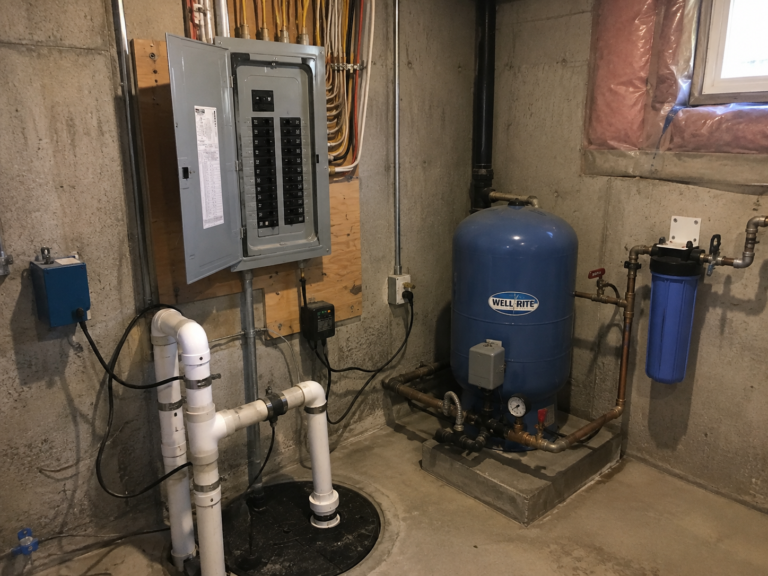
Heating Systems, Sump Pumps, Wells, and Refrigeration
Heating is often the first priority in Ontario. A gas furnace still needs electricity for controls and blower operation. Boiler systems, heat pumps, electric baseboards, and other heating setups can change the sizing conversation quickly.
Sump pumps are another major priority. In many homes, especially where basements or high water tables are a concern, losing the sump pump during a storm can lead to property damage. A generator plan should account for the pump’s running load and starting load.
Well pumps also need careful attention. Rural and semi-rural homes may lose water access when power is out. A well pump can require a significant starting surge, so it should be included in the sizing discussion early.
Refrigerators and freezers usually do not require as much power as large heating or cooling equipment, but they matter because food loss becomes an issue during longer outages. The generator does not need to run every appliance all day, but refrigeration should be part of most essential-load plans.
Home Offices and Everyday Power Needs
Remote work has changed how many homeowners think about backup power. During an outage, a home office may be more than a convenience. It may be the difference between staying productive and losing a full workday.
A practical home office backup plan may include internet equipment, a computer, monitors, task lighting, charging stations, and selected outlets. The electrical load may not be huge, but it should be placed on circuits that are included in the generator plan.
This matters for Bradford, Barrie, Innisfil, Orillia, and other commuter communities where many homeowners split time between home and office. Backup power can protect work continuity, especially when outages happen during business hours.
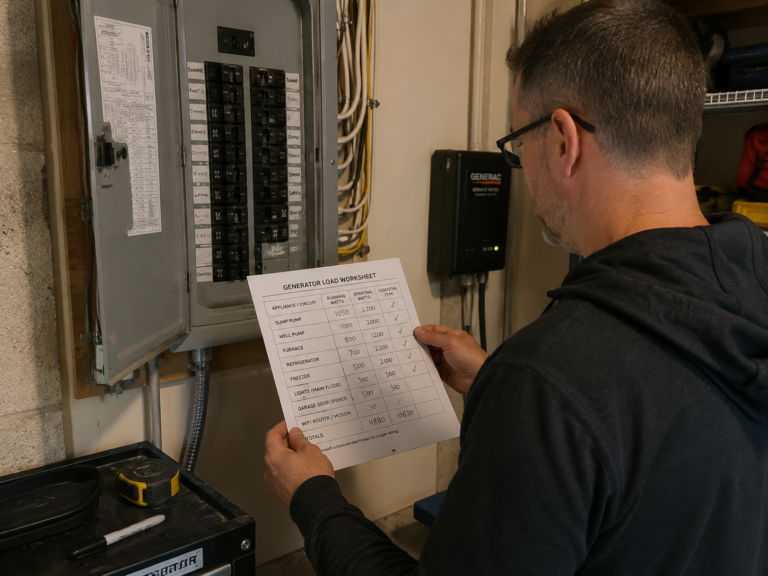
A Simple Generator Sizing Worksheet
Before asking for a generator quote, write down what the home needs during an outage. Start with heat, sump pump, refrigerator, freezer, well pump, internet, lighting, home office equipment, medical equipment, and security systems. Then mark which items are truly essential and which are only preferred.
Next, note whether any large loads should run during an outage. Air conditioning, electric cooking, dryers, hot tubs, electric heat, and workshop equipment can increase generator size quickly.
Finally, think about how the household behaves during an outage. Some families are comfortable managing loads manually. Others want the system to feel automatic and simple. That choice affects transfer switch setup and load management.
This worksheet is a starting point, not a final calculation. A licensed electrical contractor still needs to assess the home, review the panel, check the circuits, and confirm the correct generator size.
Local Generator Installation Planning
Generator sizing should connect directly to installation planning. The unit needs the right location, fuel source, transfer switch, electrical connection, and permit process.
For homes in Barrie, backup power planning often includes furnace controls, sump pumps, refrigeration, lighting, internet, and garage equipment. Our generator installation in Barrie can help match the generator setup to the circuits that matter most.
In Innisfil and nearby lake-area communities, outage planning may involve sump pumps, well equipment, detached garages, outdoor equipment, or longer utility interruptions. Our generator installation in Innisfil an review those local conditions before the generator is selected.
Homeowners should also review generator safety guidance before operating or planning backup power equipment. The Electrical Safety Authority generator safety resource and Natural Resources Canada generator safety page provide helpful safety context for homeowners.
Local Tip: Winter Load Planning Matters
A generator that seems adequate in mild weather may not support the same comfort level during winter. Heating controls, sump protection, lighting, and remote work needs should be reviewed with cold-weather outages in mind.
Installation Timeline
A simple EV charger installation can often be completed in one visit once the assessment, quote, and permit process are in place. More involved installations can take longer if the wire route is complex, outdoor work is required, or panel upgrades are needed.
The timeline depends on access, materials, scheduling, inspection requirements, and whether the existing electrical system is ready for the new load.
If a service upgrade is needed, the project can take longer because utility coordination and inspection timing may be involved. Detached garages, trenching, finished basements, or long wire runs can also add time.
Frequently Asked Questions
The right size depends on what needs to run during an outage. Essential-load, partial-home, and whole-home setups all require different sizing. The final answer should be based on a load assessment, not square footage alone.
In many homes, yes, but the generator must be sized for both the running load and starting load. Furnace controls, blower motors, sump pumps, and other motor-driven equipment should be included in the calculation.
Not always. Some homeowners only need essential circuits. Others want more comfort or full-home coverage. The right choice depends on outage risk, budget, household needs, and which loads matter most.
Ask CMi Electric to Size the Generator Around Your Home
A generator should be sized around the loads your household actually needs during an outage. That means reviewing the panel, selected circuits, starting watts, heating system, sump pump, well equipment, refrigeration, home office needs, and future electrical plans.
The safest approach is to confirm the load first, then choose the generator. That avoids undersizing, oversizing, unsafe connections, and unrealistic expectations during a power outage.
Ask CMi Electric to size a generator around the loads your household actually needs during an outage. To begin, request a generator quote and we can review the setup before equipment is selected.