
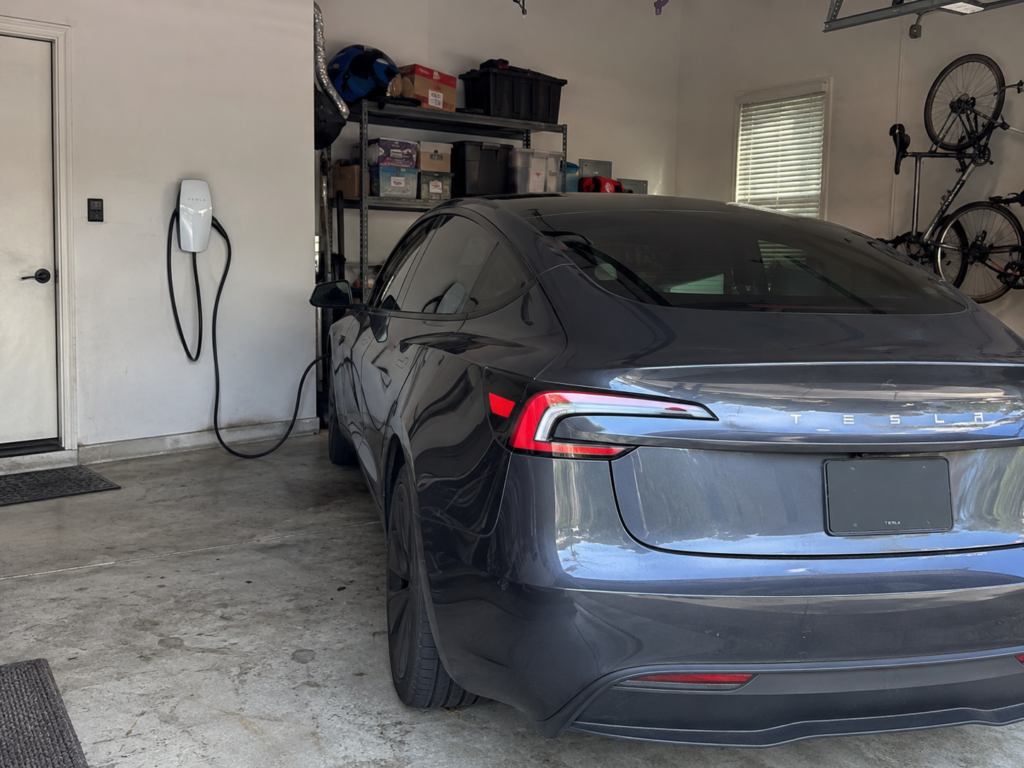
Tesla Wall Connector installation gives Ontario homeowners a faster and cleaner home charging setup than relying only on a standard outlet or mobile connector.
For Tesla owners in Barrie, Orillia, and surrounding Simcoe County communities, the main questions are usually the same. Can the panel support the charger? Where should the Wall Connector be installed? How much power should it be configured for? What permits and inspections apply?
For buyers around West Ridge, the Trailside area, and other growing Orillia neighbourhoods, electrical planning should not stop at the builder’s standard package. The better question is how the home will actually be used after possession, especially if EV charging, a generator, a finished basement, a home office, or outdoor living space is part of the plan.
What the Tesla Wall Connector Does
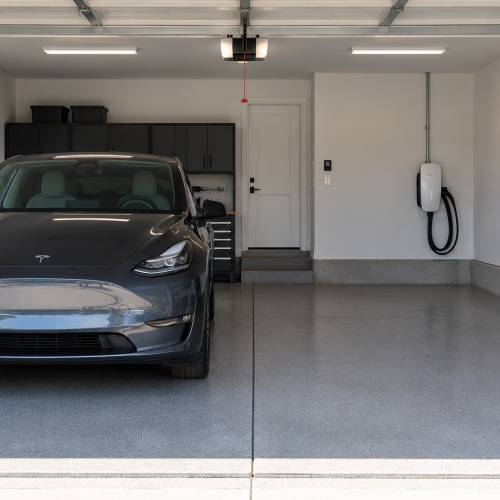
The Tesla Wall Connector is a dedicated home charging unit designed to be mounted in a fixed location. It is usually installed in a garage, on an exterior wall, or near the regular parking spot.
Unlike a basic outlet setup, the Wall Connector is hardwired to a dedicated electrical circuit. That gives the installation a cleaner look, reduces reliance on plug-in adapters, and allows the charger to be configured around the home’s electrical capacity and the vehicle’s charging ability.
Tesla’s own Tesla Wall Connector product information lists the Wall Connector as a home, workplace, and hospitality charging option with indoor and outdoor mounting capability. That flexibility is useful, but the installation still has to match the property.
The Wall Connector should be treated as part of the home’s electrical system, not just an accessory that gets mounted on the wall.
Safety Tip: Charger Output Should Match the Electrical System
A charger capable of higher output should not automatically be installed at the highest setting. The panel, wiring, breaker, service capacity, and vehicle charging limits all need to be reviewed first.
Wall Connector Versus Tesla Mobile Connector
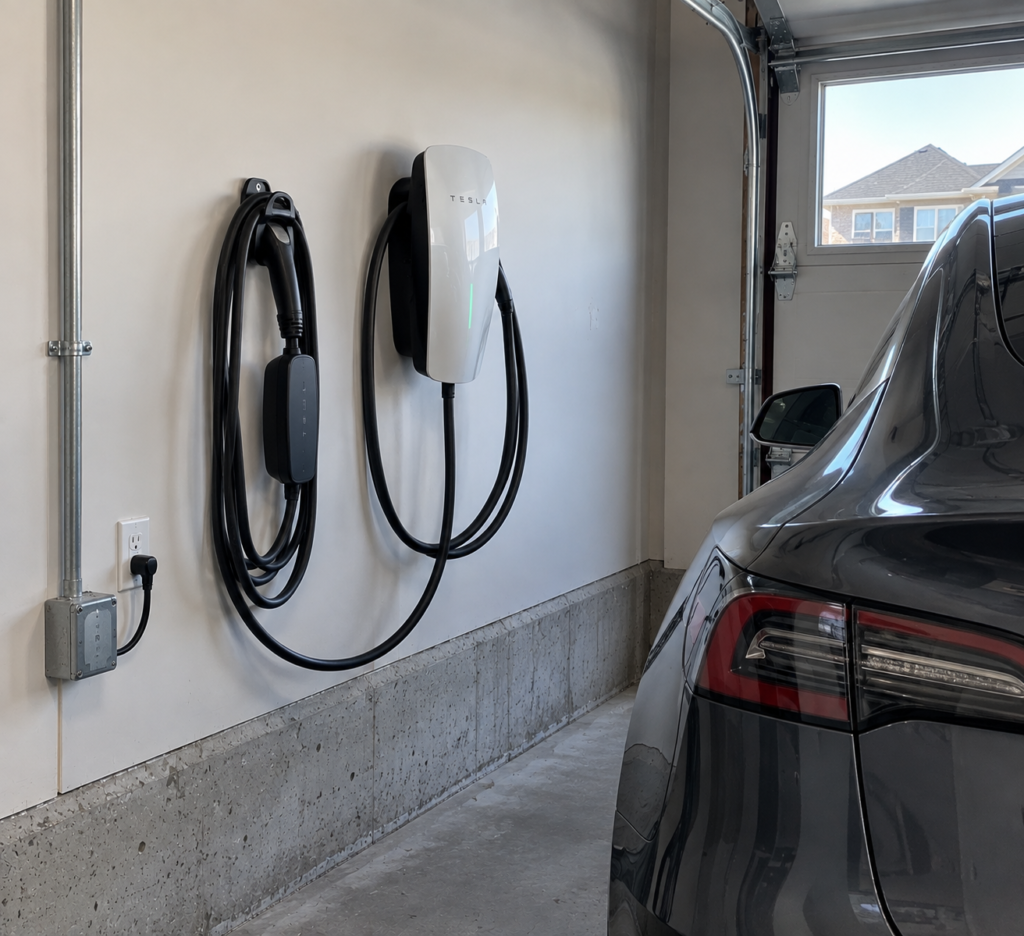
The Tesla Mobile Connector and the Tesla Wall Connector serve different purposes. The mobile connector is portable and can be useful when charging from compatible outlets while travelling or when a permanent charger is not yet installed.
The Wall Connector is designed as a fixed home charging solution. It is usually more convenient for regular overnight charging because it stays mounted, ready, and positioned where the vehicle is parked.
One option is not automatically better for every driver. A homeowner with short daily trips may be able to manage with slower charging for a period of time. A commuter, family with two vehicles, or driver who wants a more reliable overnight routine may prefer a hardwired Wall Connector.
For homeowners comparing Level 1, Level 2, and other charging options, our guide to types of electric vehicle chargers explains how the charging levels differ before choosing equipment.
Hardwired Installation Requirements
A Tesla Wall Connector is typically hardwired to a dedicated circuit. That means the electrical connection is made directly into the charger rather than plugging into a regular outlet.
Hardwired installation needs proper wire sizing, breaker selection, conductor protection, grounding, mounting, and commissioning. The wiring route may run through a basement, garage wall, utility room, finished ceiling, or exterior conduit, depending on the home.
The circuit must be installed for the amperage the charger will use. A Wall Connector configured at a lower output may need a different circuit than one configured at a higher output. That decision should be made before installation, not guessed afterward.
For local homeowners, EV charger installation in Barrie starts with the panel and parking location so the charger is installed around the actual home layout.
Code Tip: EV Charger Work Requires Proper Electrical Process
In Ontario, EV charger installation is electrical work. The circuit, breaker, wiring, equipment, notification, and inspection process should be handled properly through a Licensed Electrical Contractor.
Configurable Amperage and Panel Capacity
One of the important features of the Tesla Wall Connector is configurable amperage. The charger can be set to match the circuit it is connected to, within the limits of the product, the vehicle, and the electrical installation.
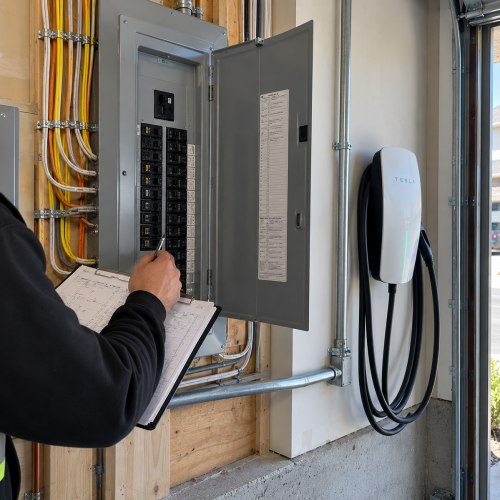
That does not mean every home can support the highest setting. The electrical panel must be reviewed before the charger output is selected. A 100-amp home, for example, may have different limits than a 200-amp home, especially if the property also has electric heat, a hot tub, a finished basement, or other large loads.
The vehicle matters too. Some Tesla models accept higher charging rates than others. Installing a larger circuit than the vehicle can use may not create a practical benefit.
Panel capacity is not the same as open breaker space. A panel can have room for a new breaker but still be limited by the total electrical load of the home.
Load Management Options
Load management can help when the home has limited electrical capacity. Instead of forcing a full service upgrade immediately, the system can sometimes control charging output so the home stays within safe limits.
This can be useful for homes where the panel is close to capacity, or where the owner wants Level 2 charging but does not need the charger running at full power every night.
Load management should not be treated as a shortcut. It still needs proper assessment, approved equipment, correct installation, and a charging setup that matches the home’s electrical demand.
The right question is not only whether the Wall Connector can be installed. The better question is whether it can be installed in a way that fits the home safely and still gives the driver enough charging speed.
Cost Tip: Load Management May Avoid Unnecessary Service Work
Some homes can support practical EV charging without jumping straight to a larger service upgrade. A load calculation helps confirm whether load management is suitable or whether the service really needs to be upgraded.
Cable Routing and Charger Placement
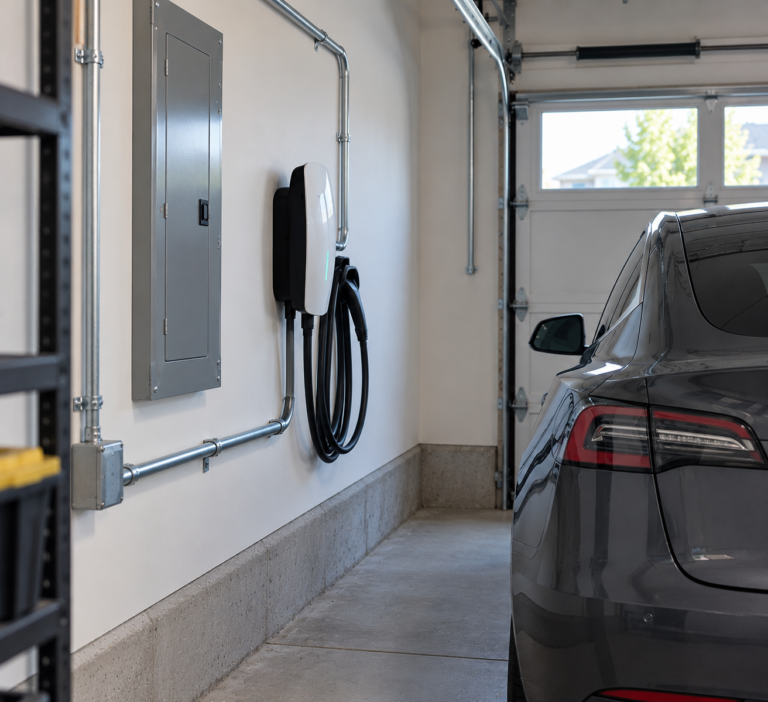
Charger placement should be based on how the vehicle is parked every day. The Wall Connector needs to be close enough for comfortable cable reach, but it also needs a safe and practical wiring route from the panel.
A charger inside the garage may be simpler when the panel is nearby and the wall is accessible. A charger mounted outside may be better when the vehicle stays in the driveway or when the garage is used mostly for storage.
Cable routing affects cost and installation complexity. A short open route is usually simpler. Finished basements, long exterior runs, detached garages, concrete, tight utility rooms, and finished walls can add time and materials.
The charger location should also account for winter. Snowbanks, garage storage, cord handling, and driveway parking can all affect how convenient the setup feels in January, not only on installation day.
Indoor Versus Outdoor Wall Connector Installation
The Tesla Wall Connector can be installed indoors or outdoors when the setup is designed correctly. A garage installation usually protects the charger and cable from direct weather exposure, which can make daily charging easier.
Outdoor installation may be the right option when the vehicle parks in the driveway, the garage is not used for parking, or the wall location works better outside. The charger, wiring method, mounting location, and protection from physical damage all matter.
For homes in Orillia, outdoor placement may need extra attention because driveway layout, snow clearing, and panel distance can change the installation plan. Our EV charger installation in Orillia can review those details before the Wall Connector location is finalized.
Local Tip: Plan Around the Parking Habit, Not the Perfect Wall
The best charger location is the one that works with how the car is parked most nights. A clean-looking wall location can still be inconvenient if the cable barely reaches or crosses a walkway.
Future Second-Tesla Planning
Many homeowners install their first charger for one vehicle, then add a second EV later. Planning for that possibility early can reduce rework.
A second Tesla may change the panel calculation, garage layout, charging schedule, and load management needs. It may not mean the home needs two chargers immediately, but the first installation should avoid blocking practical future options.
The question is how the household will charge over time. One driver may need fast recovery every night. Another may only need occasional charging. A shared charger may work for some families, while others may eventually need two charging locations.
Thinking ahead also helps with cable routing. If both parking spots may need access to charging, the first charger should be placed where it supports daily use now and does not create problems later.
Permits and Inspections in Ontario
EV charger installation must follow Ontario electrical safety requirements. This includes the dedicated circuit, breaker, wiring, charger connection, and any required review.
The Electrical Safety Authority permits and inspections page explains how notifications, permits, inspections, and the Certificate of Acceptance process work for electrical projects.
A permit is not the same as a building permit. Electrical work has its own process, and the person or contractor completing the work is responsible for making sure it is handled properly.
For homeowners, proper documentation matters. It can support insurance, resale, warranty conversations, and confidence that the charger was installed safely.
Frequently Asked Questions
Yes. A Tesla Wall Connector can be installed outside when the location, wiring method, mounting, and equipment setup are suitable. Outdoor installations should account for snow, rain, driveway layout, cord reach, and protection from damage.
Not always. The Wall Connector can be configured for different power levels depending on the circuit, vehicle, and home capacity. A panel review should happen before deciding on breaker size or charger output.
It depends on how the vehicle is used. The Wall Connector is usually better for a permanent daily charging setup, while the Mobile Connector is useful for portable or occasional charging. The right choice depends on driving habits and the home’s electrical capacity.
Sometimes, but the home needs a load calculation first. Some 100-amp homes may support charging with a lower charger setting or load management. Others may need a service upgrade before installation.
Request a Tesla Wall Connector Installation Assessment
Tesla Wall Connector installation should be based on the panel, parking location, charger output, cable route, load management options, and future charging goals.
The charger is only one part of the decision. The electrical system behind it determines whether the installation is safe, practical, and ready for regular use.
Request a Tesla Wall Connector installation assessment based on your panel, parking location, and charging goals. To begin, request an installation quote and we can review the setup before the charger is installed.