
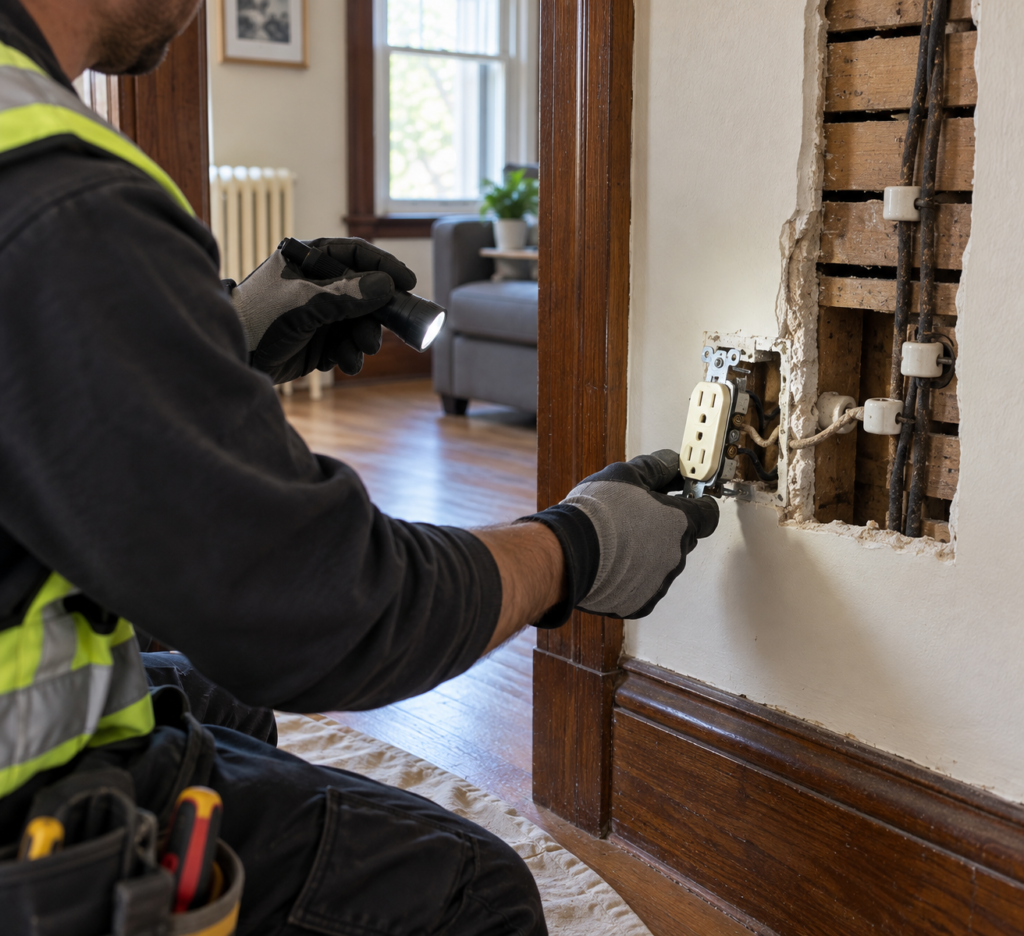
Knob-and-tube wiring in Ontario homes can create safety, insurance, and renovation concerns, especially when the wiring has been altered over time.
Not every older home contains knob-and-tube wiring, and not every home with knob-and-tube wiring has the same level of risk. The right first step is an electrical assessment, proper documentation, and a clear plan before renovating an older home, purchasing, or making assumptions about the electrical system.
What Knob-and-Tube Wiring Is
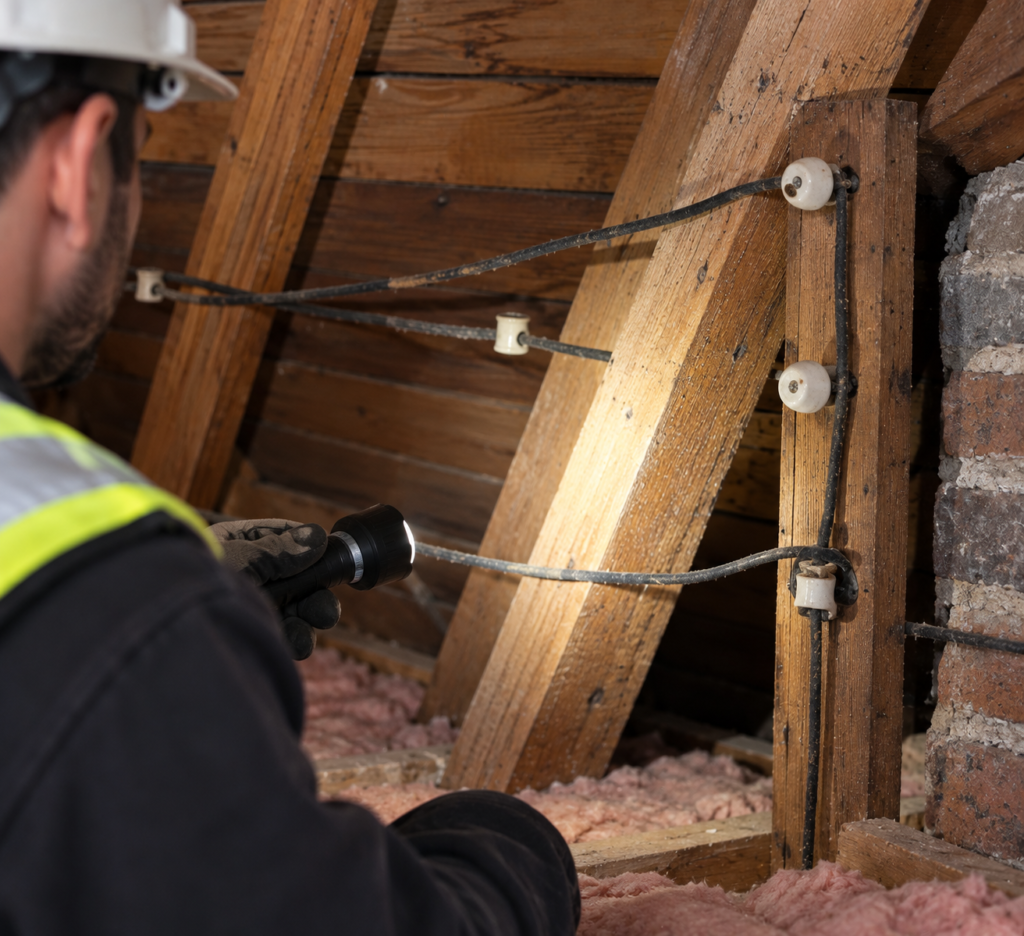
Knob-and-tube wiring is an older wiring method found in some older Ontario homes. It used separate conductors supported by ceramic knobs and tubes, rather than the modern cable assemblies used in today’s residential wiring.
The system was designed for a different era of electrical use. Older homes were not built around modern kitchens, central air conditioning, home offices, sump pumps, entertainment equipment, EV charging, or today’s number of plug-in devices.
The concern is not simply that the wiring is old. The bigger issue is whether the wiring is still intact, whether it has been overloaded, whether it has been modified improperly, and whether it is being used in a way it was never designed to support.
Safety Tip: Do Not Diagnose the Wiring From the Home’s Age Alone
A home’s age may raise the question, but it does not confirm what wiring is present. Renovations, partial rewiring, previous repairs, and hidden alterations can all change the actual condition behind the walls.
Where It May Be Found
Knob-and-tube wiring may be found in older walls, ceilings, attics, basements, crawl spaces, switch boxes, outlet boxes, and light fixtures. Sometimes it remains active. In other homes, it may be partly replaced, partly abandoned, or mixed with newer wiring.
That mixed condition is one reason inspection matters. A home may have newer outlets or a newer panel while older wiring remains hidden in parts of the building. Cosmetic updates do not prove that the electrical system has been fully modernized.
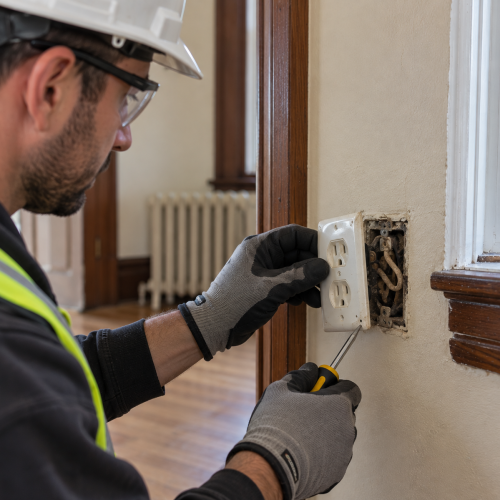
Some homeowners first discover the issue during a home inspection, insurance application, renovation, panel review, or when an electrician opens a device box. In Barrie, older neighbourhoods and renovated homes may need a closer look before larger projects move ahead. Our home rewiring in Barrie can help confirm what wiring is present and what replacement options should be considered.
Why Hidden Alterations Matter
Knob-and-tube wiring becomes more concerning when it has been changed without proper planning. Over time, older homes often go through renovations, added outlets, lighting changes, basement work, kitchen updates, insulation upgrades, and panel changes.
Those updates may hide the original wiring or connect newer wiring methods to older circuits. If previous work was not done correctly, the issue may not be obvious from the finished room.
Hidden splices, improper junctions, damaged insulation, covered wiring, missing documentation, or extended circuits can all affect the risk. A room may look freshly renovated while the wiring behind it still needs attention.
Inspection should focus on what is actually present, not what the home appears to have from the outside.
Code Tip: Abandoned Wiring Should Be Clearly Documented
If knob-and-tube wiring has been disconnected or replaced, the work should be documented clearly. Abandoned wiring, partial replacement, and active circuits should not be left ambiguous for future homeowners, insurers, or electricians.
Inspection Limits and What an Electrician Can Confirm
An electrical inspection can confirm a lot, but it also has limits when wiring is hidden behind finished walls and ceilings. A Licensed Electrical Contractor can inspect accessible areas, open selected devices where appropriate, review the panel, look for visible older wiring, test circuits, and identify warning signs.
What the inspection cannot always do is see every hidden run without opening finishes. That is why the final recommendation may depend on the home’s layout, access points, renovation plans, insurance requirements, and whether active knob-and-tube wiring is confirmed.
The inspection should also look for signs that the wiring has been altered. Older wiring that remains untouched in limited areas is different from older wiring that has been extended, overloaded, damaged, or mixed with newer work in unsafe ways.
The Electrical Safety Authority knob-and-tube wiring guidance recommends having a Licensed Electrical Contractor assess the home’s electrical system when knob-and-tube wiring is present.
Insurance Concerns With Knob-and-Tube Wiring
Insurance is one of the biggest reasons homeowners and buyers deal with knob-and-tube wiring quickly. Some insurers may refuse coverage, refuse renewal, ask for an inspection, require replacement, or request documentation before approving a policy.
The exact requirement can vary by insurer. One company may ask for proof of replacement. Another may accept an electrical assessment or remediation plan. A buyer should ask the insurance provider what documentation is needed before closing or before work starts.
This is especially important during a home purchase. A buyer may discover knob-and-tube wiring late in the process and need fast answers for insurance, financing, negotiation, or closing conditions.
A home inspection note is not always enough for insurance. Insurers often want information from a qualified electrical professional because the issue relates to the electrical system, not only general home condition.
Renovation Triggers That Can Change the Conversation
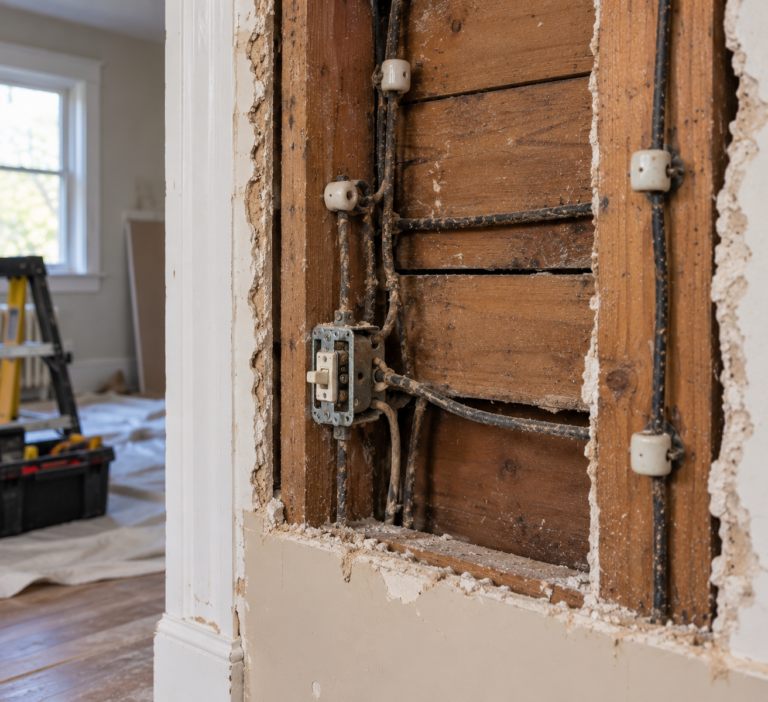
Renovations often bring knob-and-tube wiring to the surface. A kitchen remodel, bathroom update, basement renovation, attic insulation project, addition, lighting upgrade, or panel change may expose wiring that had been hidden for years. Working with a qualified renovation electrician in Barrie can help ensure the electrical work is considered before walls and ceilings are closed again.
Once walls or ceilings are open, it may make sense to replace older wiring in that area rather than close everything back up and leave the issue for later. Access changes the cost and practicality of rewiring.
Renovation also adds modern electrical demand. A kitchen with more appliances, a finished basement with entertainment equipment, or a home office with computer equipment may place more load on circuits that were never planned for that use.
For older homes outside Barrie, the same planning applies. If a renovation uncovers older wiring, home rewiring in Collingwood may be needed to replace active knob-and-tube circuits and prepare the home for safer modern use.
Partial Replacement and Abandoned Wiring
Partial replacement is common in older homes. One area may be fully updated while another still has original wiring. A kitchen may have newer circuits while upstairs lighting remains older. A panel may be new while hidden branch wiring has not been fully replaced.
Partial replacement can be practical, but it needs clear documentation. The homeowner, insurer, future buyer, and electrician should be able to understand which wiring is active, which wiring has been removed, and which wiring has been abandoned.
Abandoned wiring should not create confusion. If older wiring is no longer active, that should be clear from the work performed and the records kept. If it remains active, the homeowner should know where and why.
A vague statement like “some wiring was updated” is not enough. Good documentation makes future decisions easier and helps prevent repeated investigations.
When Full Rewiring May Be Considered
Full rewiring may be considered when active knob-and-tube wiring is widespread, when renovations are already opening walls, when insurance requires replacement, or when the homeowner wants a long-term solution.
It may also be considered when older wiring has been altered repeatedly, when there are signs of heat or damage, or when the home needs new circuits for modern use.
Full rewiring can be more disruptive than targeted replacement, but it can also bring clarity. The homeowner knows the old active branch wiring has been addressed, the circuits can be better planned, and the electrical system can be documented more cleanly. Homeowners considering a larger replacement can learn more about residential rewiring services and what may be involved in planning the work.
In Midland and nearby areas, older homes with renovation plans may need staged rewiring if access, budget, or occupancy makes full replacement difficult at once. Our home rewiring in Midland can help review the scope and determine whether targeted replacement or broader rewiring makes more sense.
Local Tip: Rewiring Plans Should Match the Renovation Schedule
If floors, ceilings, walls, or attic spaces will already be opened, electrical work should be planned at the same time. That can reduce disruption and help avoid reopening finished areas later.
Home Purchase Planning
Buyers should not assume that every older home has knob-and-tube wiring, but they should ask the right questions when buying an older property. The electrical panel, visible wiring, renovation history, permits, insurance requirements, and inspection notes all matter.
If knob-and-tube wiring is suspected, buyers should request an electrical assessment before making final decisions. That assessment can help clarify whether the wiring is active, whether it appears altered, whether replacement is recommended, and whether the insurer may need documentation.
This can affect negotiation. A buyer may ask for repairs, a credit, documentation, or time to complete an inspection. The best path depends on the property, purchase timeline, insurer requirements, and the buyer’s renovation plans.
Ontario’s electrical installation and safety requirements are governed through the Electrical Safety Code under Ontario Regulation 164/99. Buyers and homeowners should ensure that any required rewiring is assessed and completed according to current provincial requirements.
Frequently Asked Questions
No. Knob-and-tube wiring should be inspected carefully, but the risk depends on condition, alterations, active use, insulation contact, overloading, and whether the wiring has been maintained or replaced properly.
Sometimes, but insurance requirements vary. Some insurers may refuse coverage or require replacement, while others may ask for an electrical assessment or proof of completed work.
Yes. Partial rewiring may be possible depending on the home, access, active circuits, and risk level. The key is documenting what was replaced, what remains active, and what has been abandoned.
A home inspector may identify signs of knob-and-tube wiring, but a Licensed Electrical Contractor should assess the electrical system. Hidden wiring behind finished surfaces may require a more focused electrical review.
It should be assessed before renovating. If walls, ceilings, or attic spaces are being opened, replacement may be easier and more practical while access is available.
Request an Inspection and Rewiring Plan
Knob-and-tube wiring should be handled with clear information, not assumptions. The condition, active circuits, hidden alterations, insurance requirements, renovation plans, and documentation all affect the right solution.
A homeowner may need targeted replacement, full rewiring, better documentation, or a staged plan that fits the renovation schedule. The decision should be based on inspection, not only the age of the home.
Request an inspection and rewiring plan before renovating or purchasing a home with suspected knob-and-tube wiring. To begin, you could explore home rewiring services before the next step is taken.