
When the power goes out in Barrie or Simcoe, a generator keeps the most important parts of a home or business running. A generator turns fuel into motion, then turns that motion into electricity.
A generator does not make power from nothing. It converts mechanical energy into electrical energy through a part called an alternator.
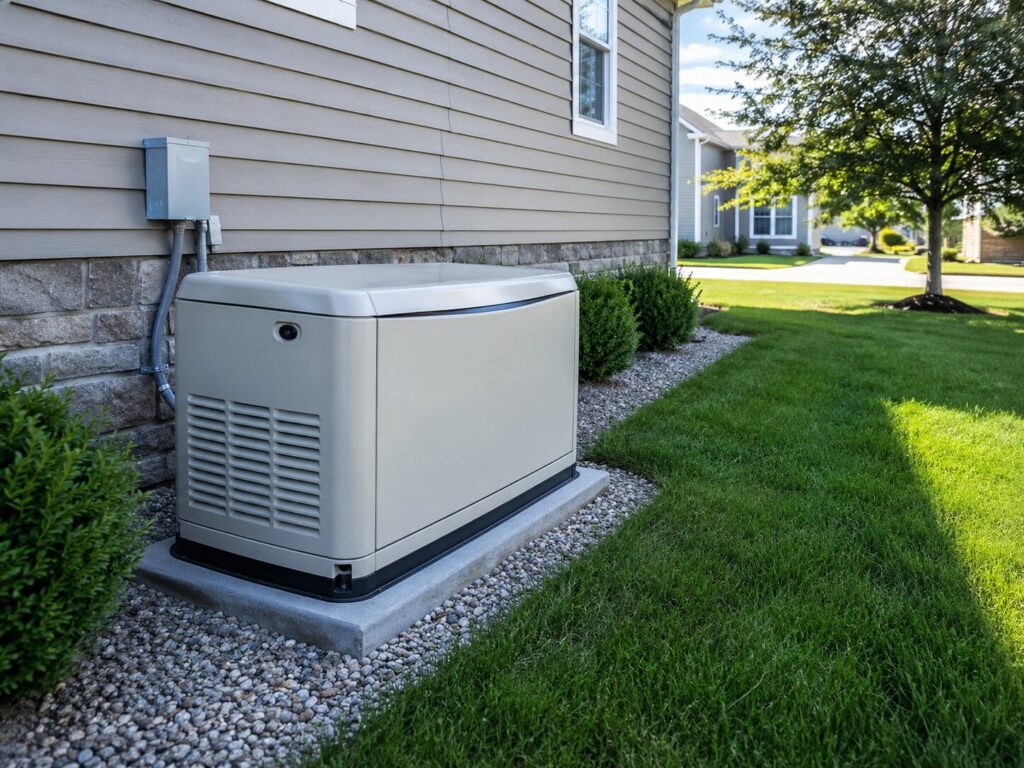
The Simple Version: Fuel Turns a Motor, the Motor Turns an Alternator
A generator starts with an engine. The engine burns fuel, such as natural gas, propane, diesel, or gasoline, depending on the type of generator.
That engine spins a shaft connected to the alternator. Inside the alternator, magnets and wire coils work together to produce voltage. Once voltage is created, electrical current can flow to the circuits connected to the generator system.
This process is called electromagnetic induction. In plain terms, movement through a magnetic field creates electrical power.
The real difference between generator types comes down to size, fuel source, wiring method, safety controls, and how the generator connects to the electrical panel.
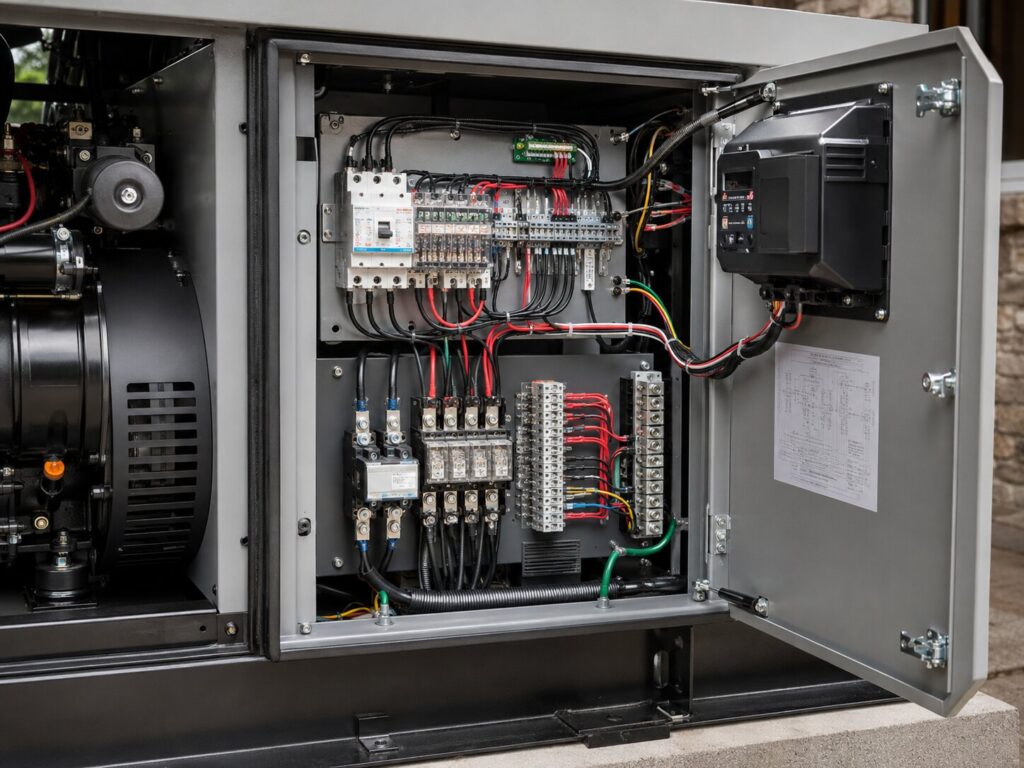
The Main Parts of a Generator Explained
A generator works as a system. The machine outside is important, but the wiring, control equipment, and transfer method matter just as much.
Most generator systems include:
- Engine: Creates the mechanical force.
- Alternator: Converts motion into electrical power.
- Fuel system: Supplies natural gas, propane, diesel, or gasoline.
- Voltage regulator: Helps keep output stable.
- Control panel: Manages startup, monitoring, and shutdown.
- Cooling and exhaust system: Removes heat and fumes safely.
- Transfer switch: Moves the building from utility power to generator power.
Each part has a job. A generator with poor voltage control can damage sensitive electronics. A strong generator without the correct transfer equipment can create a safety hazard. For backup power projects in Barrie, our generator installation in Barrie focuses on the full system, from generator selection to safe electrical connection.
Safety Tip: Keep Exhaust Away From Openings
Generators produce exhaust, which means placement matters. A generator should sit outside with proper clearance from windows, doors, vents, and air intakes.
What Happens When the Power Goes Out
A standby generator is designed to respond automatically. When utility power fails, the transfer switch detects the outage. The system waits briefly, then starts the generator.
Once the generator reaches stable output, the transfer switch disconnects the building from the utility supply. It then connects the selected circuits or panel to generator power.
When utility power returns, the transfer switch moves the building back to the grid. The generator then cools down before shutting off.
Portable generators work differently. They usually require manual fueling, outdoor placement, extension cords, and careful load management. They can help during short outages, but they are not the same as a standby system.
Why the Transfer Switch Is Non Negotiable
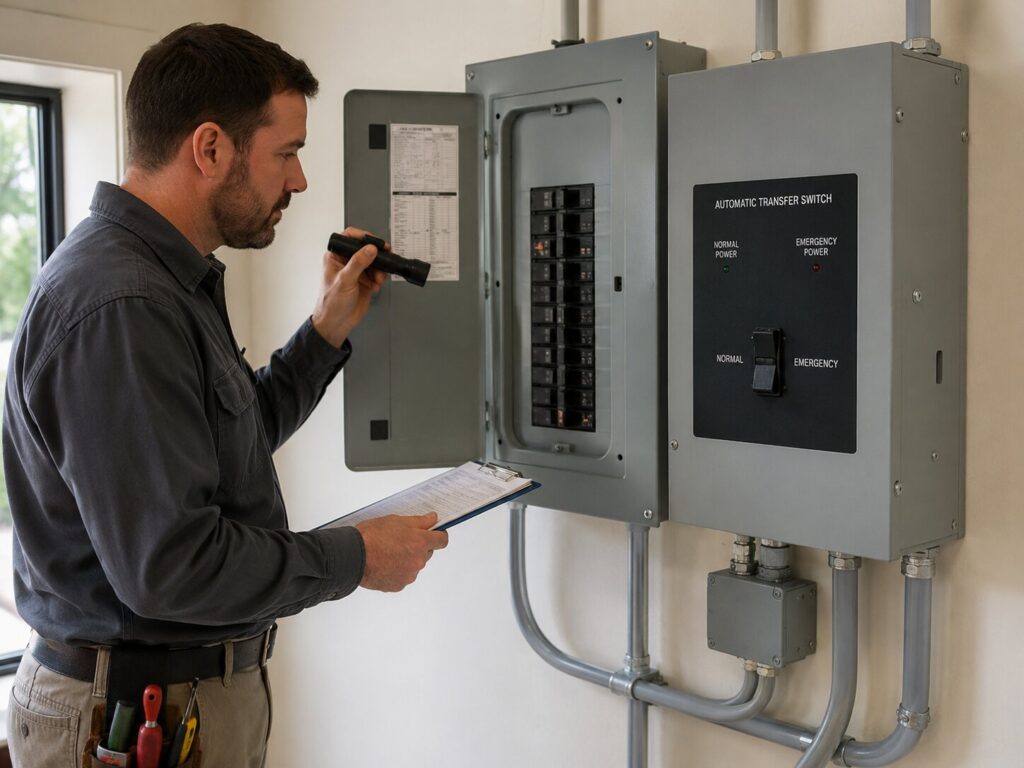
The transfer switch is one of the most important parts of a generator installation. It decides whether the building is being powered by the utility or by the generator.
Without a proper transfer switch, generator power can feed backward into the electrical system. This is called backfeeding. It can put utility workers at risk, damage equipment, and create a serious electrical hazard.
A correct transfer switch isolates the generator from the utility lines. It also makes sure the generator only feeds the circuits it is designed to handle.
Older homes in Barrie may need review before a generator is installed, especially if the panel is outdated or the wiring has become a concern. When existing wiring needs to be corrected first, our Barrie home rewiring service can help prepare the electrical system before backup power is added.
Code Tip: ESA Requirements Apply
In Ontario, generator installations connected to a building’s electrical system must follow Electrical Safety Authority requirements. Permits, inspections, grounding, wiring, and approved transfer equipment all matter. A generator becomes part of the electrical system once it is connected to the building.
Choosing the Right Generator Setup for Your Property
Not every property needs the same generator. The right setup depends on what needs to stay powered during an outage.
A portable generator may be enough for basic temporary power. It can run selected devices through extension cords outside. A home standby generator is usually the better fit when the goal is automatic backup power.
Commercial properties often need a more detailed plan. Refrigeration, lighting, computers, payment terminals, sump pumps, and operating equipment can all change the load calculation.
Properties in Orillia, rural Simcoe County, and cottage areas often face different backup power needs than homes in central Barrie. Our Orillia electricians can review the property layout, fuel access, panel condition, and essential loads before a recommendation is made.
Generator Sizing: What Actually Matters
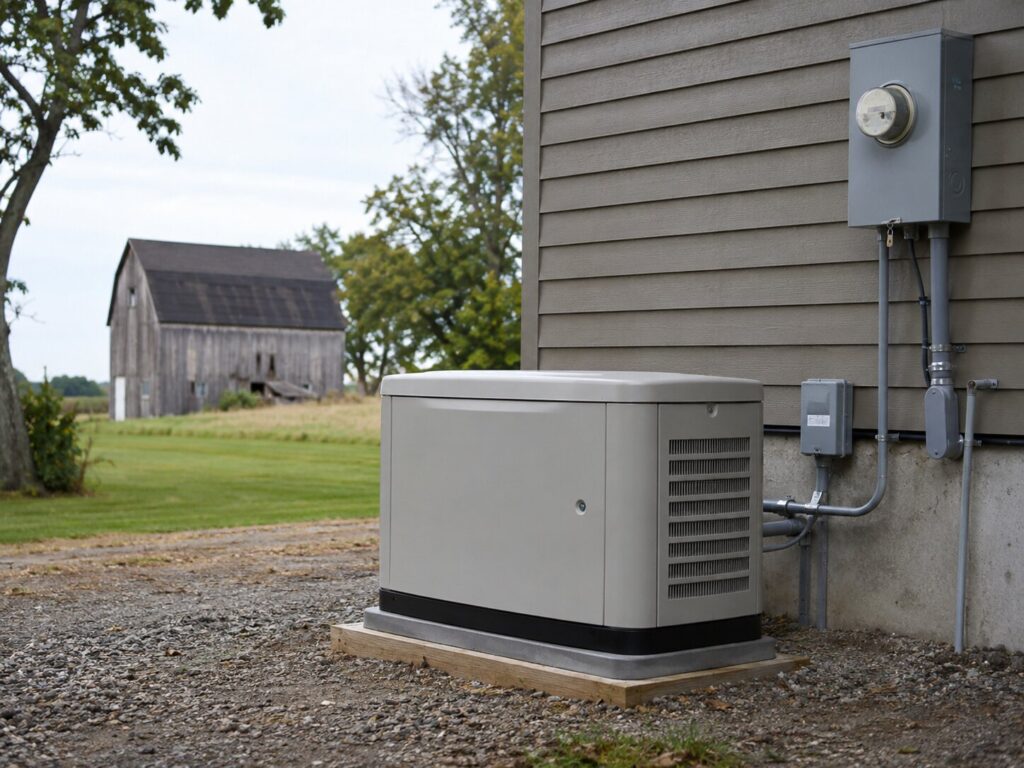
Generator size is based on electrical load, not the size of the home alone. A smaller home with a sump pump, well pump, electric range, and medical equipment may need a more careful setup than a larger home with mostly gas appliances.
The first decision is what must run during an outage. Most homeowners start with essentials such as furnace controls, sump pumps, refrigerators, freezers, selected lights, internet equipment, security systems, and a few outlets.
Motors also need extra attention. Pumps, compressors, and some HVAC equipment draw more power when they start than when they run. This starting load can affect generator sizing.
If EV charging is part of the property plan, it helps to understand charger types and electrical demand through our guide to types of electric vehicle chargers before finalizing a backup power setup.
For homes and businesses in Innisfil, lake-area properties and sump pump reliance can make backup planning more important than it first appears. Our electricians in Innisfil can help identify which loads should be protected and which can stay off during an outage.
Cost Tip: Do Not Oversize Without a Reason
A larger generator can cost more to buy, install, fuel, and maintain. Load management is often better than powering everything at once.
Professional Installation and ESA Requirements
Generator installation is not just placing a unit beside the building. A safe setup includes electrical planning, conductor sizing, transfer equipment, grounding, clearances, and inspections.
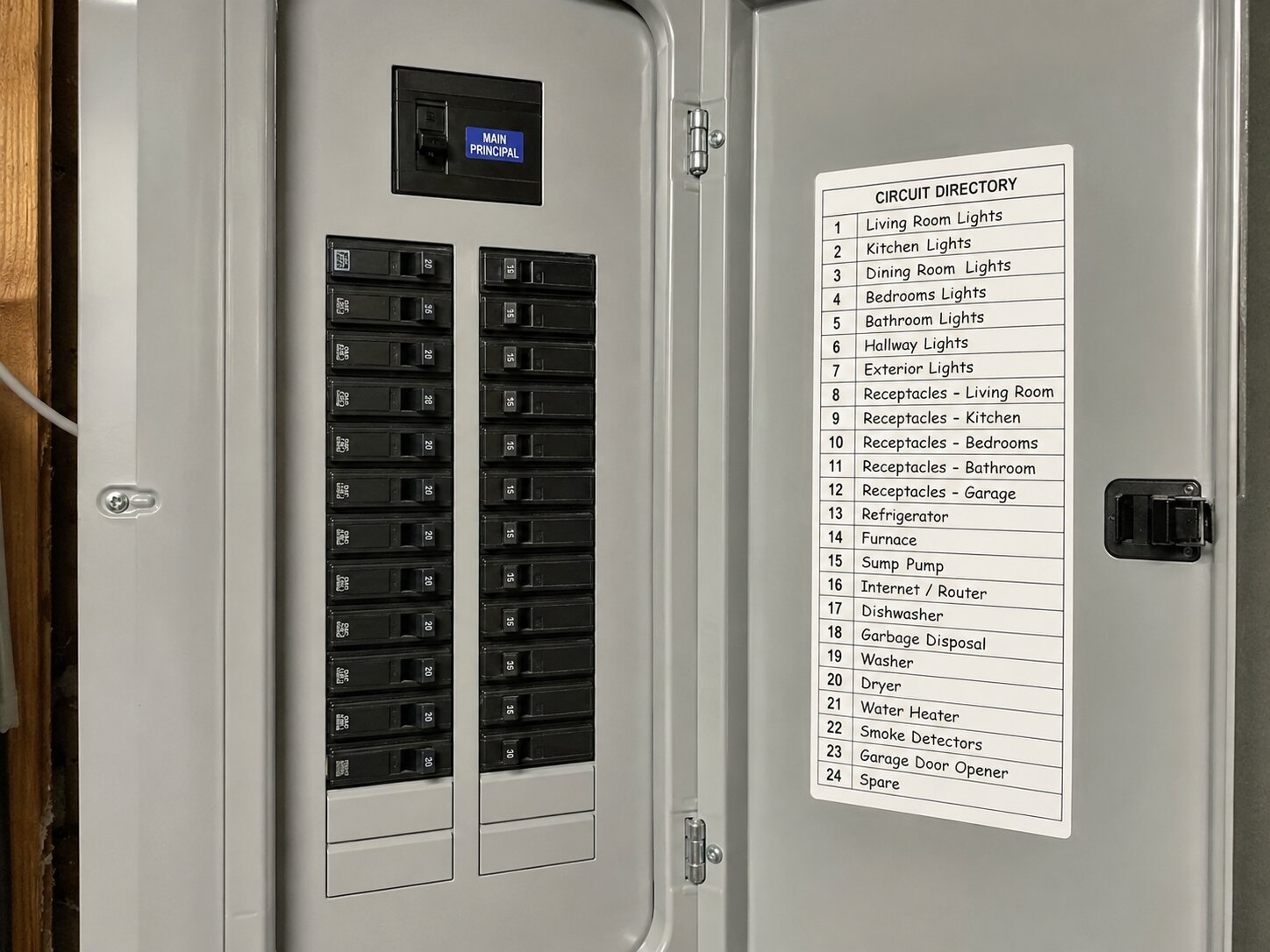
The panel must be reviewed. The generator location must be reviewed. The fuel source must be considered. The selected circuits must match the generator capacity.
We also look at how the building is actually used. A homeowner may care most about heat, refrigeration, and sump protection. A business may need payment systems, lighting, or equipment uptime.
When backup power is being considered in Barrie or Simcoe County, the safest next step is a site-specific review through our CMi Electric quote request page.
Frequently Asked Questions
Yes, but only if the generator, transfer equipment, electrical service, and load plan are designed for that purpose. Many homes use a generator for essential circuits instead of the entire house.
Most standby generators are designed to start automatically when utility power fails. The automatic transfer switch handles the changeover once the generator is ready.
No. A generator should not connect to a panel through an improvised cord or outlet. A proper transfer switch or approved interlock system is required for safe connection.
Generator size depends on the circuits and equipment that need backup power. Starting watts, fuel source, panel capacity, and future electrical needs all affect the final recommendation.
Ready to Plan Backup Power for Your Home or Business?
A generator works by turning fuel into motion, then turning that motion into electricity. The system around the generator is what makes it safe and useful.
The right setup protects essential circuits, avoids backfeeding, meets Ontario safety requirements, and gives the property a better plan for outages.
If backup power is becoming a priority, we can review the property, discuss the loads that matter, and recommend a generator setup that fits the building.