

A new garage in Bradford may be marketed as EV-ready, but that phrase needs to be confirmed before closing. An outlet, an empty conduit, and a fully installed Level 2 charger circuit are not the same thing.
For buyers in Bradford West Gwillimbury, including growing areas near Bradford Highlands and the Bond Head growth area, the right question is simple: can this garage safely support the charger you plan to use?
What EV-Ready Should Actually Mean
EV-ready should mean that the electrical work needed for charging has been properly planned, installed, and confirmed. In real estate and builder conversations, the term is sometimes used loosely.
A home may have a standard garage outlet and still not be ready for Level 2 charging. A garage may have conduit installed, but no properly sized wire, breaker, or confirmed panel capacity. A builder may also provide a rough-in that still requires a Licensed Electrical Contractor to complete the final circuit and charger installation.
That difference matters because Level 2 charging is a continuous electrical load. The charger may run for hours, often overnight, so the electrical system has to be matched to the charger, the vehicle, and the rest of the home.
For buyers who want the home reviewed before installing charging equipment, our EV charger installation in Bradford West Gwillimbury helps confirm whether the garage, panel, wiring route, and charger plan are aligned.
Safety Tip: Do Not Assume a Garage Outlet Is Enough
A regular receptacle in the garage is not the same as a dedicated Level 2 charging circuit. Before using any charger regularly, confirm the circuit rating, wiring, breaker, outlet type, and equipment requirements.
Outlet, Conduit Rough-In, or Fully Installed Charger Circuit
A standard outlet is usually the lowest level of readiness. It may support Level 1 charging, but Level 1 charging is slow and may not match the daily needs of a commuter using an EV as a main vehicle.
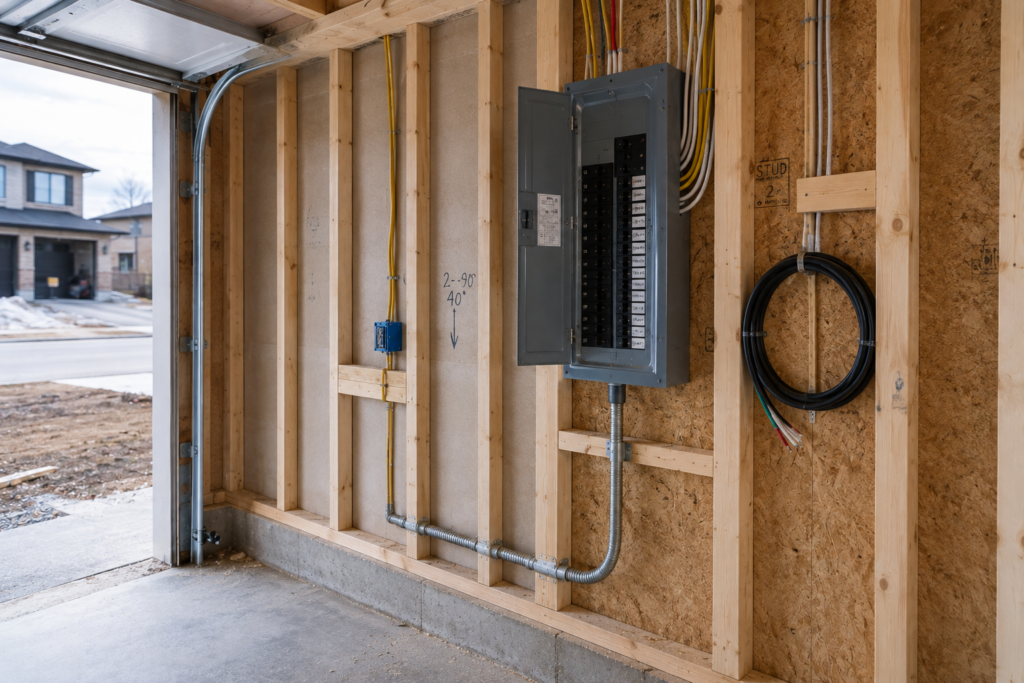
A conduit rough-in is a step above that, but it still needs to be understood clearly. Conduit can provide a pathway for future wiring. It does not automatically confirm wire size, breaker size, panel capacity, permit status, or charger compatibility.
A fully installed charger circuit is different. That means the proper electrical circuit has been installed for the charger, with the correct wiring, breaker, protection, and inspection requirements addressed. In some cases, the charger itself may also be mounted and commissioned. In other cases, the circuit may be ready for a charger selected after closing.
Before relying on builder language, ask exactly what has been installed. The answer should be specific enough that an electrician can verify the setup.
Closing-Day Checklist for Bradford Buyers
Before closing, buyers should confirm the electrical details in writing where possible. The goal is not to slow down the purchase. The goal is to avoid discovering after possession that the garage needs more electrical work than expected.
- Panel Size: Start with the service size and panel rating. A 100-amp panel may be able to support EV charging in some homes, but not in every home. A 200-amp panel usually provides more flexibility, but capacity still needs to be reviewed.
- Breaker Space: Open breaker spaces are useful, but they are not the full answer. The panel may have room for a breaker while still being limited by the home’s total electrical load.
- Wire Gauge: Start with the service size and panel rating. A 100-amp panel may be able to support EV charging in some homes, but not in every home. A 200-amp panel usually provides more flexibility, but capacity still needs to be reviewed.
- Garage Location: Confirm where the charger will be mounted and where the vehicle will sit overnight. Cord reach, snow, parking habits, wall space, and panel distance can all affect the final setup.
- Charger Ownership: Some buyers expect the builder to provide the charger. Others only receive a rough-in. Ask whether the charger unit is included, who owns the equipment, and whether the installed circuit matches the charger you plan to use.
Code Tip: Breaker Space Is Not a Load Calculation
A panel with empty slots is not automatically ready for EV charging. A proper load calculation looks at the electrical demand of the whole home, not only the number of open spaces in the panel.
Why Bradford Commuters Should Plan Charging Carefully
Bradford is a practical EV market because many homeowners commute toward the GTA, Barrie, Newmarket, Vaughan, or other parts of Simcoe County and York Region. That daily driving pattern can make home charging more important than public charging.
A short trip may be manageable with slower charging. A longer commute usually changes the conversation. The vehicle needs enough overnight recovery to be useful every morning, especially in winter when range can drop and cabin heating uses more energy.
Future planning also matters. A household may buy one EV first, then add a second electric or plug-in hybrid vehicle later. If the garage only supports one limited charging setup, the electrical system may need another review sooner than expected.
For buyers comparing charging levels before choosing equipment, our guide to types of electric vehicle chargers explains the difference between Level 1, Level 2, and faster public charging in clearer terms.

Why Inspection and Load Calculation Still Matter
Even when a rough-in is present, inspection and load calculation still matter. A rough-in may show that someone planned for future EV charging, but planning is not the same as confirmation.
A load calculation reviews whether the home’s electrical service can support the charger along with the rest of the house. Large appliances, heating equipment, air conditioning, basement plans, hot tubs, generators, and future electrical upgrades can all affect the result.
Inspection matters because EV charging equipment becomes part of the home’s electrical system. In Ontario, electrical work must follow safety requirements, and homeowners should understand what applies before adding major equipment. The Ontario EV charging information provides a provincial reference point for charging electric vehicles, while local growth and planning context can be reviewed through Town of Bradford West Gwillimbury planning.
A buyer should not call a home EV-ready until the actual electrical provisions have been confirmed. That means reviewing the panel, the circuit, the wiring path, the charger plan, and the inspection requirements.
Local Tip: Ask Before the Garage Is Filled
After moving day, garages quickly fill with storage, shelving, tools, bikes, and seasonal equipment. Reviewing the charger location before closing or soon after possession can make installation cleaner and easier to plan.
When Builder Approval Is Still Needed
Before closing, the builder controls what can be changed inside the home. If the buyer wants a stronger EV rough-in, a different charger location, upgraded wiring, or a dedicated charger circuit before possession, that request usually needs to go through the builder.
The builder may have set upgrade packages, cut-off dates, approved electricians, and restrictions around construction-stage changes. Buyers should ask early, because changes may become harder or unavailable once drywall, finishing, and inspections move forward.
After possession, the homeowner can work with a Licensed Electrical Contractor. At that point, we can review the panel, confirm what was installed, inspect the garage conditions, and recommend the right path for the charger being used.
For broader service support after closing, our Bradford West Gwillimbury electricians can assess the home’s electrical setup before charger work, garage upgrades, or future load additions.
Indoor Garage Charging Versus Outdoor Charging
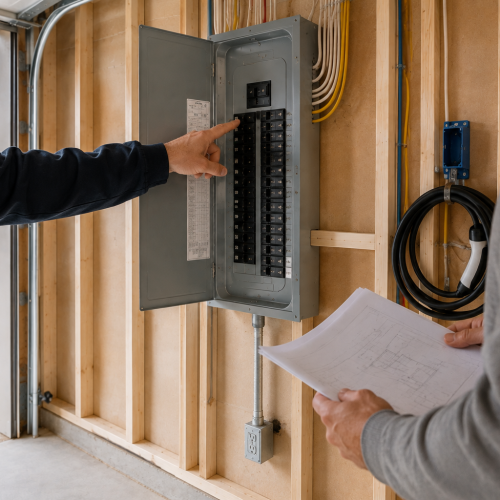
A garage installation is often the preferred setup because the charger is protected from direct weather exposure. The vehicle, cord, and charger are usually easier to manage when everything is inside.
Outdoor charging can still work when the charger is rated for exterior use and the wiring method is appropriate. For Bradford homes with driveway parking, tight garages, or multiple vehicles, outdoor placement may be the more practical option.
The location should be chosen around real use. Snow clearing, cord length, driveway layout, wall access, panel distance, and where the vehicle parks overnight all matter. A charger mounted in the wrong spot can turn daily charging into a frustrating routine.
Cost Tip: A Better Charger Location Can Reduce Rework
Before finalizing the charger location, picture where the vehicle will park during winter, where the cord will sit, and whether a second EV may be added later. Small placement decisions can prevent expensive changes later.
Frequently Asked Questions
Not necessarily. A regular garage outlet may support slow Level 1 charging, but it does not confirm that the home is ready for Level 2 charging. The circuit, wiring, breaker, panel capacity, and charger requirements need to be reviewed.
No. A conduit rough-in may provide a pathway for future wiring, but it does not automatically confirm wire size, breaker size, available capacity, or charger compatibility. The final charger still needs to match the electrical setup.
Yes. Before closing, ask what has actually been installed, whether the charger is included, what the panel capacity is, and whether the rough-in or circuit has been inspected. Confirming early helps prevent surprises after possession.
Confirm the Garage Before You Rely on It
A new home in Bradford should not be treated as EV-ready until the electrical details have been verified. The wording may sound clear in a sales conversation, but the actual provision could be a regular outlet, a conduit pathway, or a completed charger circuit.
The right review looks at the panel size, breaker space, wire gauge, charger location, circuit rating, inspection status, and the vehicle owner’s charging needs.
Have our team confirm that your Bradford garage and panel are ready for the charger you plan to use. To start, request a quote and we can review the setup before the charger is installed.