

New-build homes in Orillia give homeowners a chance to plan electrical properly before habits, furniture, appliances, vehicles, and outdoor equipment are already locked in.
For buyers around West Ridge, the Trailside area, and other growing Orillia neighbourhoods, electrical planning should not stop at the builder’s standard package. The better question is how the home will actually be used after possession, especially if EV charging, a generator, a finished basement, a home office, or outdoor living space is part of the plan.
Why Electrical Planning Matters Before Possession
A new home can look finished while still leaving important electrical decisions unresolved. Outlets may technically meet code, but that does not always mean they match how the homeowner plans to live in the space.
The best time to think about wiring, panel capacity, EV charging, generator readiness, dedicated circuits, lighting, and exterior power is before everything is covered, finished, landscaped, and occupied. After possession, changes can still be made, but the work may involve more access issues, patching, finished walls, or coordination.
For Orillia buyers, this matters because many new homes are being planned around modern equipment. Families want garage charging, basement flexibility, stronger home office setups, better exterior lighting, and backup power options. Those choices all connect back to the electrical system.
Local Tip: Think Beyond the Builder Standard
Builder packages are often designed around standard use. A homeowner planning EV charging, a workshop, a future basement finish, or backup power should review those loads before assuming the default electrical layout will be enough.
Start With the Electrical Loads, Not the Devices
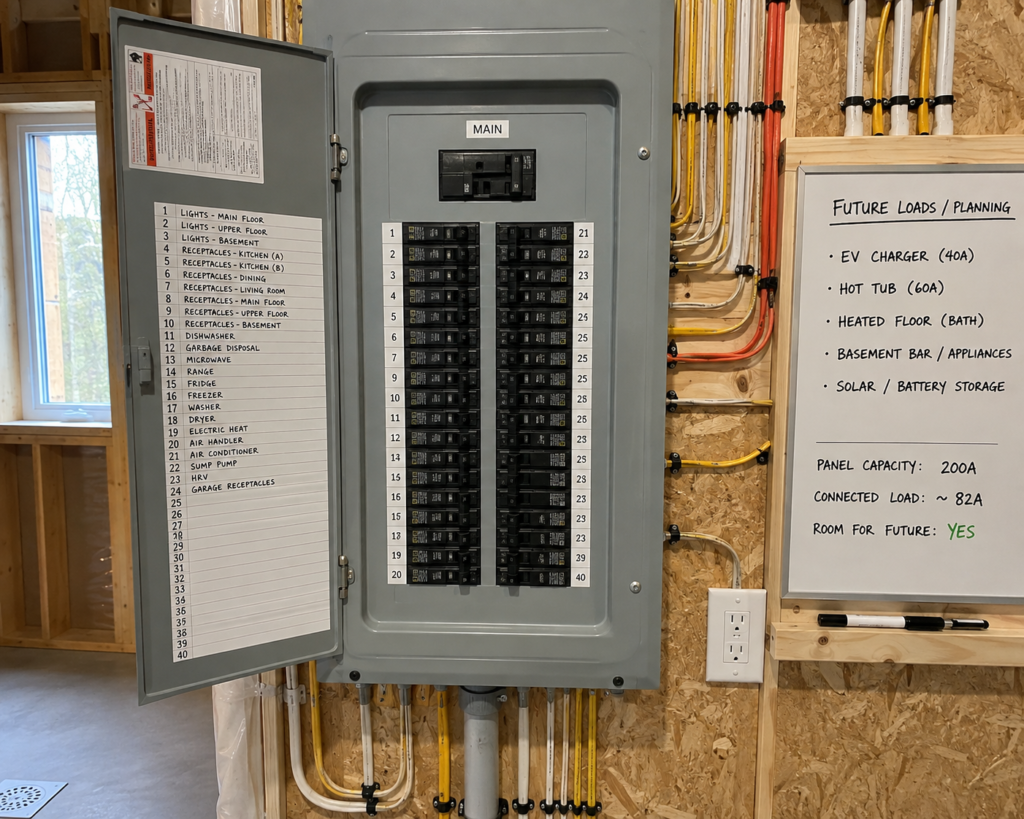
Electrical planning works best when the discussion starts with load. A load is anything that uses power. A fridge, oven, EV charger, sump pump, furnace, hot tub, computer setup, generator transfer switch, and garage heater all place demand on the system.
A new-build buyer may think about devices one at a time. The electrical system has to support them together. That is why panel capacity, circuit planning, and future upgrades should be reviewed as connected decisions.
Our Orillia electricians can help review the home’s planned electrical use before major equipment is added, especially when the builder plan does not clearly account for future loads.
Kitchen Electrical Planning
The kitchen usually carries more electrical demand than homeowners expect. Countertop appliances, built-in ovens, induction cooking, microwaves, dishwashers, range hoods, refrigerators, wine fridges, coffee stations, and under-cabinet lighting all need to be considered.
A practical kitchen plan looks at where appliances will actually sit. A coffee station may need a better outlet location. A future beverage fridge may need dedicated planning. An island may need power that feels natural to use instead of being placed only where it was easiest during construction.
Lighting also matters. Pot lights, pendants, under-cabinet lights, dimmers, and task lighting should be planned around how the kitchen will be used in the morning, during meal prep, and when entertaining.
Safety Tip: Do Not Treat Kitchen Circuits Like Regular Outlet Planning
Kitchens often need dedicated circuits and proper protection because high-demand appliances are used close together. Overloading kitchen circuits can lead to nuisance tripping and unsafe workarounds.
Garage Electrical Planning
The garage is no longer just a place to park. In many Orillia new builds, the garage becomes the charging area, storage area, workshop, sports equipment zone, freezer location, and sometimes the access point for outdoor power.
EV charging should be discussed early because it can affect panel capacity, breaker sizing, wire routing, and charger placement. A charger installed after possession can still work well, but early planning may make the route cleaner and the installation more practical.
For homeowners planning an electric vehicle, EV charger installation in Orillia should be reviewed alongside the home’s panel capacity and daily driving routine. A Level 2 charger is a continuous load, which means it needs more planning than a standard receptacle.
Garage outlets should also match real use. A freezer, tool bench, compressor, battery chargers, garage door openers, exterior equipment, and seasonal décor can all compete for available power if the layout is too basic.

Basement Electrical Planning
Basements are often left for later, but they should still be part of the first electrical conversation. A future finished basement may need lighting, outlets, heating equipment, bathroom ventilation, entertainment wiring, office space, storage lighting, and possibly a kitchenette or laundry changes.
If the basement may become a rental suite, in-law suite, gym, theatre room, or workspace, the electrical plan should leave room for that future use. It is easier to think ahead than to discover later that the panel is already tight or that important circuits were never planned.
A basement also plays a role in wire routing. Depending on the home design, future electrical upgrades may need access through unfinished areas. Once the basement is finished, some routes become more difficult and more expensive to work through.
Outdoor Electrical Planning
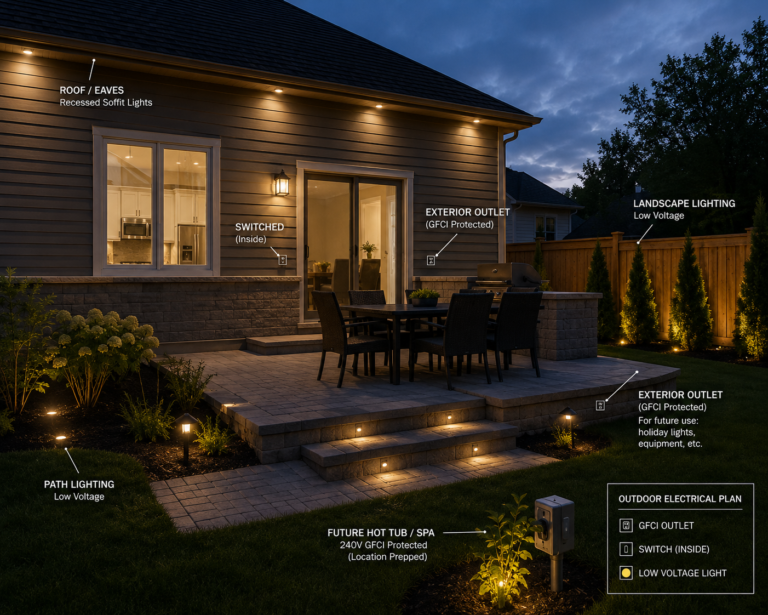
Outdoor electrical planning is easy to overlook during a new-build purchase. Homeowners may focus on the kitchen, bathrooms, and bedrooms first, then realize later that the backyard, driveway, porch, and side yard do not have enough practical power.
Exterior outlets should be planned around landscaping, barbecues, patio heaters, hot tubs, sheds, lighting, cameras, holiday decorations, and maintenance equipment. A good outdoor plan also considers weather exposure and safe placement.
Orillia weather matters here. Snow, water, freeze-thaw cycles, and outdoor equipment use all affect how electrical devices should be placed and protected.
Homeowners planning a hot tub, outdoor kitchen, detached shed, or pool equipment should involve electrical planning before the landscaping is complete. It is much easier to plan conduits, routes, and dedicated circuits before hardscaping and finished surfaces are installed.
Home Office Electrical Planning
Home offices need more than one outlet behind a desk. Computers, monitors, printers, routers, charging stations, backup drives, standing desks, lighting, and video call equipment can create a steady demand.
A new-build home may also need stronger planning around internet equipment and power stability. The modem, router, network switch, and work devices should not be squeezed into a random corner because that was the easiest outlet location.
For homeowners working remotely, the office should be planned like a productive workspace. That means outlet placement, lighting, cable management, surge protection, and possibly a dedicated circuit if the equipment load justifies it.
Code Tip: Major Equipment Needs More Than an Empty Breaker Space
An open slot in the panel does not automatically mean the home can support an EV charger, generator connection, hot tub, or large renovation load. Capacity should be reviewed properly before equipment is selected.
Builder Approval and Licensed Electrical Work
Before possession, electrical changes usually need to go through the builder. The homeowner may not be able to bring in outside contractors or make direct changes while the home is still under construction.
After possession, the homeowner has more control, but electrical work still has to be completed properly. In Ontario, electrical work must follow Electrical Safety Authority requirements. The Electrical Safety Authority homeowner information explains why homeowners should understand the rules before renovating, buying, selling, or changing electrical systems.
Municipal planning can also affect how neighbourhoods develop and how properties are serviced. The City of Orillia planning and development page is a useful local reference for broader planning context.
For homeowners moving into new construction, the key is knowing when a request belongs with the builder and when it should be handled after possession by a Licensed Electrical Contractor.
Electrical Planning in Orillia New-Build Communities
New-build areas around Orillia can vary by lot size, garage layout, panel location, driveway design, and future upgrade needs. A home near West Ridge or Trailside may have different practical considerations than a rural edge property or a home closer to the waterfront.
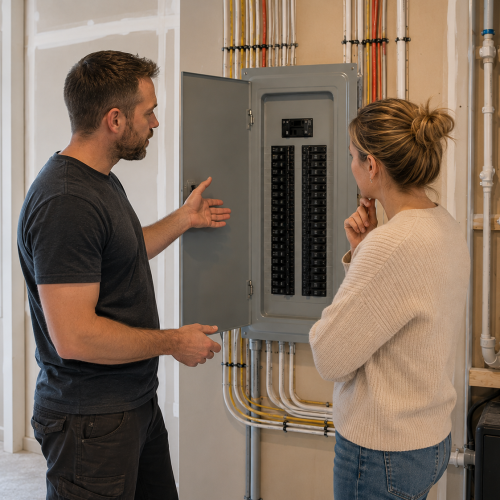
The house plan is only part of the review. The way the homeowner plans to live in the home matters just as much. A commuter with an EV, a family finishing the basement, a remote worker, and a homeowner planning backup power will each need a different electrical discussion.
CMi Electric is based in Barrie and works with homeowners and businesses across Simcoe County. Our Barrie electrical services support the same planning approach across the region, including Orillia projects where new equipment or future upgrades are being considered.
When to Request an Electrical Assessment
The best time to request an electrical assessment is before adding major equipment. EV chargers, hot tubs, generators, basement renovations, garage upgrades, and outdoor living projects should not be planned in isolation.
An assessment helps confirm the panel capacity, existing service size, wiring path, installation requirements, and whether builder approval is still needed. It also helps avoid buying equipment that does not match the home’s electrical setup.
Ask CMi Electric to review your Orillia home’s planned electrical loads before adding major equipment. To start the conversation, request a quote and we can review the home’s electrical plan before the next upgrade moves forward.
Frequently Asked Questions
It is better to plan EV charging before or around possession, even if the charger is installed later. The panel capacity, garage layout, wiring route, and charger location can all affect the installation. Reviewing those details early helps avoid extra work once walls, storage, and finishes are already in place.
In many cases, yes, but the request usually needs to go through the builder before possession. The builder may have rules around approved changes, timelines, pricing, and what can be altered during construction. After possession, electrical changes should be handled by a Licensed Electrical Contractor.
Yes, especially when the homeowner plans to add major equipment such as an EV charger, generator, hot tub, finished basement, workshop, or outdoor electrical features. A new home may meet standard requirements, but that does not always mean it is already planned for every future load.