
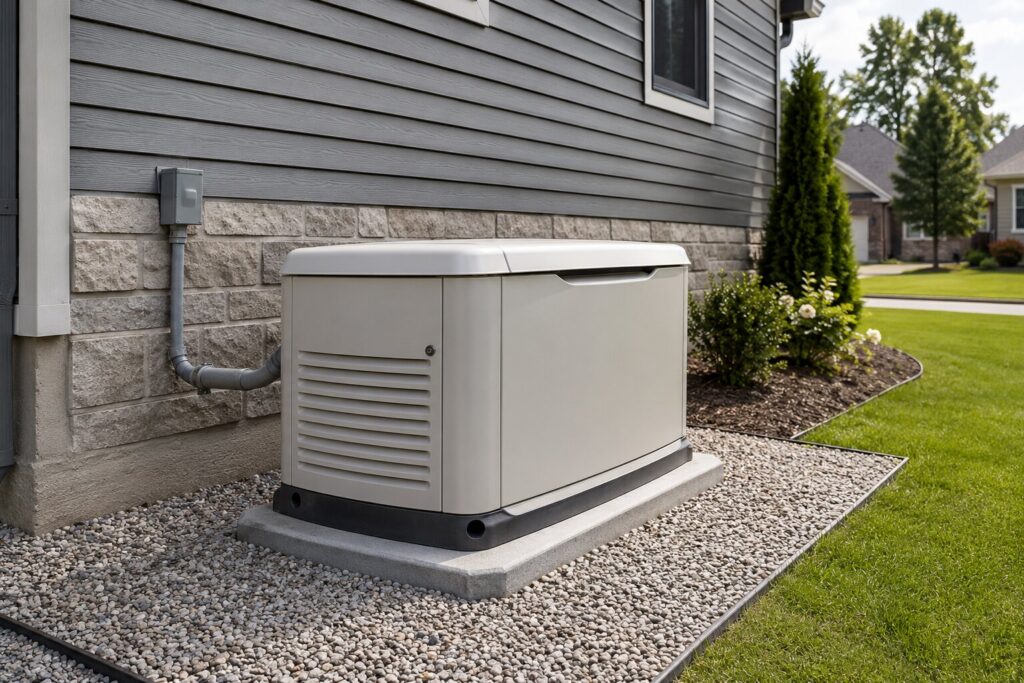
Whole-home generator cost in Ontario depends on the generator size, fuel source, installation location, transfer switch, electrical work, gas work, permits, and inspection requirements.
For homeowners in Barrie and Simcoe County, the generator unit is only one part of the investment. A safe standby generator installation also needs the right wiring, approved transfer equipment, proper clearances, and a setup that matches what the home actually needs during an outage.
Generator Size
Generator size has one of the biggest impacts on cost. A smaller standby generator may be designed to power essential circuits only. A larger system may be designed to support most of the home or, in some cases, the full electrical load.
The right size is based on demand, not guesswork. Furnace controls, sump pumps, fridges, freezers, well pumps, lighting, internet equipment, medical devices, and security systems may all be considered essential. Larger loads such as air conditioning, electric ranges, dryers, hot tubs, electric heat, or shop equipment can quickly change the sizing conversation.
A common mistake is assuming that a “whole-home generator” automatically means everything in the home can run at the same time. The generator has a limit, and the load plan has to respect that limit. In many homes, the better setup is a properly sized standby generator with smart load control or selected circuits.
When we review generator installation in Barrie, the first step is understanding what the homeowner wants powered when the grid is down. That gives the project a real electrical basis before equipment is selected.
Cost Tip: Bigger Is Not Always the Better Buy
A larger generator usually costs more to purchase, install, fuel, and maintain. A properly planned load setup can often provide the protection a homeowner actually needs without oversizing the system.
Installation Location
Generator placement affects both cost and safety. A standby generator needs to be installed outside with proper clearance from windows, doors, vents, air intakes, property lines, and combustible materials.
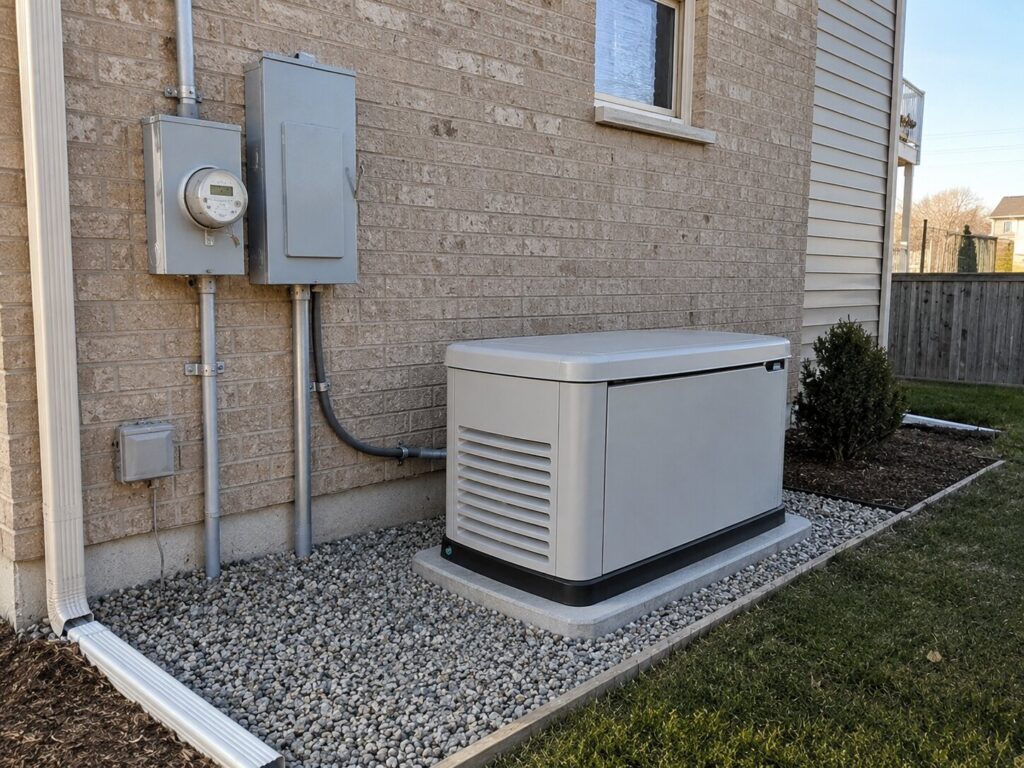
The distance from the electrical panel can also affect the installation. A generator placed farther from the panel may require more wiring, more conduit, more labour, and a more involved route. The same applies if the generator is far from the gas meter or propane supply.
A simple location with clear access can keep the job more efficient. A tight side yard, finished exterior surfaces, landscaping, decks, fences, or long utility runs can increase the scope.
Fuel Source
Most whole-home standby generators use natural gas or propane. Some larger systems may use diesel, but residential projects most often involve gas or propane.
Natural gas can be convenient when the property already has service available and the gas supply can support the generator. Propane may be a better fit for rural homes, cottage properties, or areas without natural gas service.
The fuel source affects more than the generator. Gas line sizing, distance from the fuel supply, regulator requirements, propane tank placement, and coordination with a qualified gas technician can all affect cost.
In communities outside central Barrie, including rural areas near Orillia and surrounding Simcoe County, fuel availability may shape the project from the beginning. Our Orillia electricians can help review the electrical side of the generator plan while the fuel requirements are being confirmed.
Automatic Transfer Switch
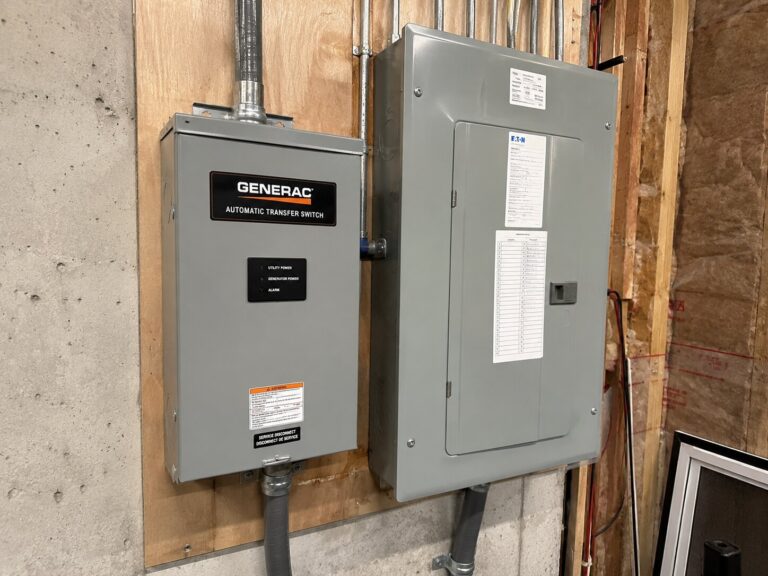
The automatic transfer switch is one of the most important parts of a standby generator system. It detects when utility power goes out and safely transfers the home from grid power to generator power.
When utility power returns, the switch moves the home back to the grid and allows the generator to shut down after its cooldown cycle.
The transfer switch also prevents generator power from feeding backward into utility lines. That matters for safety, equipment protection, and code compliance.
A whole-home generator without the right transfer equipment is not a proper standby power system. The transfer switch has to be selected and installed according to the generator, panel, service size, and load plan.
Safety Tip: Backfeeding Is Extremely Dangerous
A generator should never be connected through an improvised cord, dryer outlet, or unapproved panel connection. Backfeeding can put utility workers at risk and can damage electrical equipment.
Electrical and Gas Work
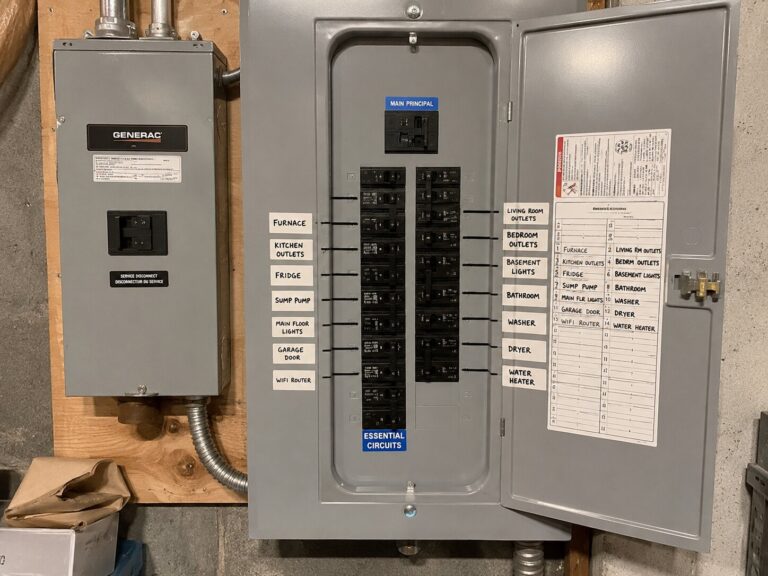
Standby generator installation cost includes more than setting the generator on a pad. The electrical work may involve the transfer switch, panel connections, selected circuits, conductor sizing, grounding, bonding, disconnects, labelling, and testing.
The gas work is separate but still part of the project planning. The generator needs enough fuel to run properly under load. If the gas supply is undersized or the propane setup is not ready, the generator may not perform as expected.
Some homes also need panel corrections before the generator can be connected. Older panels, crowded wiring, damaged breakers, poor labelling, or outdated wiring can affect the final scope.
For older Barrie homes where the electrical system needs correction before backup power is added, our Barrie home rewiring service can help address wiring and safety concerns before the generator installation moves ahead.
Permit and Inspection Requirements
Generator installation in Ontario must follow electrical safety requirements. When a standby generator is connected to a home’s electrical system, the installation needs proper electrical work, permits, and inspection where required.
The Electrical Safety Authority exists to help make sure electrical installations meet Ontario safety requirements. This matters with generator work because the system involves utility power, generator power, transfer equipment, grounding, and connected household circuits.
Permits and inspections are not paperwork for the sake of paperwork. They help confirm that the system has been installed properly and can be used safely during an outage.
Code Tip: A Standby Generator Becomes Part of the Electrical System
Once a generator is connected to the home, it is no longer just an outdoor machine. It becomes part of the electrical system and needs to be installed by qualified professionals under the proper rules.
What Appliances a Whole-Home Generator Can Power
A whole-home generator can power different appliances depending on size and setup. Some systems are designed for essentials such as heating controls, sump pumps, fridges, freezers, lighting, outlets, internet, and security systems.
Larger systems may also support air conditioning, well pumps, kitchen appliances, or more of the home’s everyday load. The exact answer depends on the generator capacity and how the transfer switch is configured.
This is where expectations need to be clear. A generator can only power the loads it is sized and wired to support. Trying to run too much at once can overload the system.
Homeowners planning future electrical additions should think ahead. EV charging, hot tubs, additions, workshops, and finished basements can all change the electrical plan. If an EV is part of the long-term plan, our guide to types of electric vehicle chargers can help explain how charging demand fits into the larger home electrical picture.
Ongoing Maintenance
A standby generator needs maintenance to stay ready. The goal is not just to have a generator installed. The goal is to have a generator that starts when the power goes out.
Maintenance can include oil changes, filter checks, battery testing, inspection of wiring and connections, enclosure cleaning, firmware or control checks, and general performance review. The exact schedule depends on the generator model, usage, and manufacturer recommendations.
Generac generator cost and other standby generator pricing should be considered alongside maintenance. A lower upfront number does not always tell the full story if long-term service, parts, access, or setup quality are overlooked.
A generator that sits untouched for years may not respond when needed. Regular maintenance protects the investment and reduces the chance of discovering a problem during an outage.
When a Standby Generator Makes Sense
A standby generator makes sense when power loss creates real risk or serious inconvenience. Some homes rely on sump pumps, well pumps, medical equipment, refrigeration, heating controls, or security systems. Some properties experience outages often enough that temporary solutions no longer feel reliable.
A standby generator can also be a strong fit for rural homes, larger properties, lake-area homes, and businesses where downtime is expensive.
For homeowners in Innisfil, lake-effect weather, sump pump reliance, detached garages, and longer utility interruptions can make backup power planning more important. Our electricians in Innisfil can review the electrical side of the property before a generator size or location is chosen.
Businesses may need backup power for lighting, refrigeration, point-of-sale systems, computers, access control, security, or essential equipment. The planning process is different because the generator may need to protect operations, not just comfort.
Frequently Asked Questions
Generator size depends on what you want powered during an outage. Essential circuits may need a smaller system, while whole-home coverage requires a larger generator and a proper load review.
Cost is affected by generator size, transfer switch requirements, fuel source, location, electrical work, gas work, permits, inspections, and whether panel corrections are needed.
No. The generator model is only one part of the cost. Installation conditions, fuel setup, transfer switch selection, and electrical requirements can change the final investment.
A properly installed standby generator with an automatic transfer switch can start automatically when utility power goes out and switch back when power returns.
Requesting a Generator Assessment
The best way to price a whole-home generator is to assess the property. The generator size, location, fuel source, transfer switch, panel condition, and desired backup loads all need to be reviewed before a realistic cost can be confirmed.
We look at what should stay powered, how the electrical system is currently set up, and what work is required to make the installation safe.
For homeowners and businesses in Barrie and Simcoe County, our CMi Electric quote request page is the place to start a standby generator installation review.