
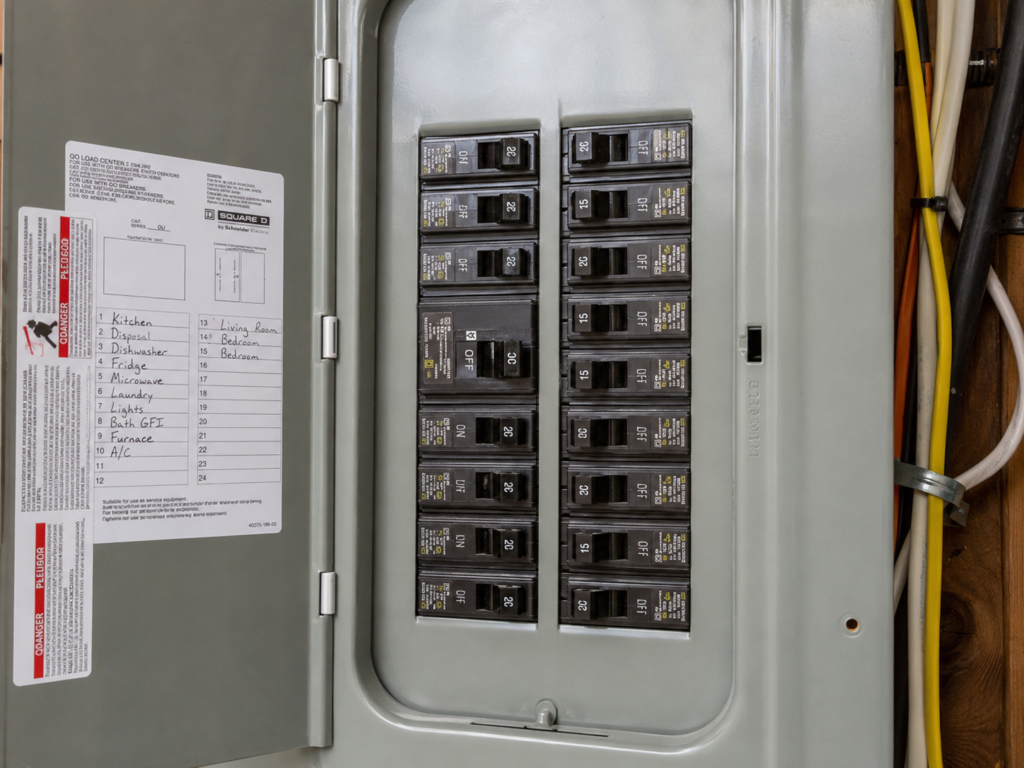
EV charger installation cost in Ontario depends on the charger type, the distance from the electrical panel, the home’s available capacity, whether outdoor wiring is needed, and whether the existing electrical service can support the new load.
For many homeowners in Barrie and Simcoe County, a straightforward Level 2 EV charger installation may be relatively simple. Other homes need extra planning because the panel is full, the garage is far from the panel, or the home still has a 100-amp service.
For homeowners and business owners in Barrie and Simcoe County, the key is knowing what can be checked safely and when the issue needs a licensed electrician.
Level 1 Versus Level 2 Charging
Level 1 charging uses a standard household outlet. It is the slowest charging option and may work for light daily driving, plug-in hybrids, or homeowners who do not drive long distances.
Level 2 charging uses a 240-volt circuit. This is the option most homeowners ask about when they want faster, more practical charging at home. It is also the setup most people mean when they search for how much to install an EV charger at home in Canada.
The difference matters because Level 2 charging requires a dedicated electrical circuit, the right breaker, correct wire sizing, a safe installation location, and proper permitting. The charger may look simple on the wall, but the circuit behind it does the real work.
For homeowners comparing charging speeds, outlet types, and equipment options, our guide to types of electric vehicle chargers explains the practical difference between Level 1, Level 2, and faster public charging.
Little Tip: Level 2 Is Usually About Daily Convenience
Level 1 charging may be enough for some drivers, but Level 2 charging is usually a better fit when the vehicle needs to recover more range overnight. The right choice depends on driving habits, vehicle battery size, and how often the car is used.
Typical Installation Cost Factors
A standard EV charger installation can cost much less than a complicated one. The final price is shaped by the electrical work required, not just the charger mounted on the wall.
The biggest cost drivers are panel capacity, distance from the panel, wire routing, charger amperage, indoor versus outdoor installation, permit requirements, and whether the home needs upgrades before the charger can be installed safely.
The charger unit itself may also be separate from the installation cost. Some homeowners already have a charger from the vehicle manufacturer. Others purchase a charger before booking the electrical work. Either way, the installation still has to match the charger specifications and the home’s electrical system.
For EV charger installation in Barrie, our electric vehicle chargers in Barrie are planned around the charger, the electrical panel, the parking location, and the way the vehicle will be used day to day.
Distance From the Panel
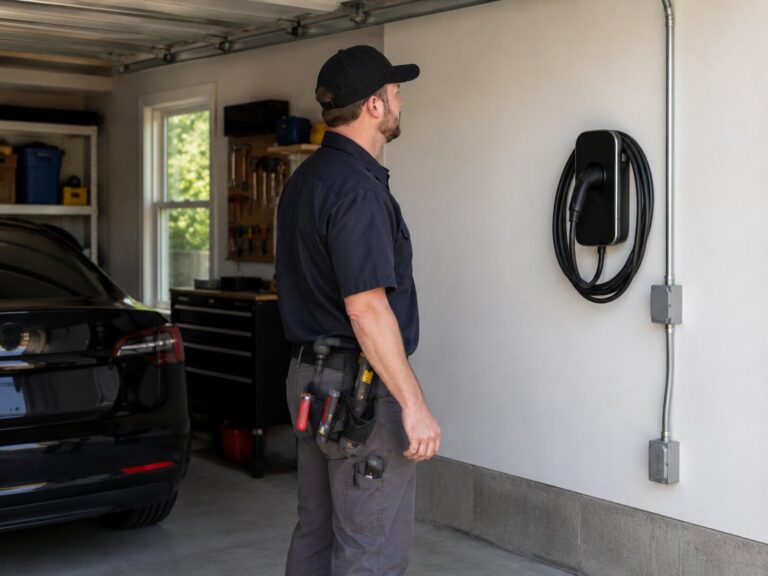
Distance from the electrical panel can have a major effect on EV charger installation cost. A charger installed close to the panel is usually simpler than one installed on the far side of the house, in a detached garage, or outside near a driveway.
Longer distances usually mean more wire, more labour, more routing work, and more decisions about how the circuit will travel through finished or unfinished areas. Finished basements, tight ceilings, exterior walls, concrete, and detached structures can all change the scope.
The cleanest installation is not always the shortest path. The wire route has to be safe, accessible where required, protected from damage, and installed according to code.
Cost Tip: Charger Location Can Change the Quote
Before choosing a charger location, think about where the car is parked most often. Moving the charger a few feet may reduce installation complexity if it creates a better route from the panel.
Electrical Panel Capacity
Panel capacity is one of the first things we look at before installing a Level 2 charger. A home may have physical breaker space available, but that does not automatically mean the electrical service has enough capacity.
The load calculation matters. The home’s existing appliances, heating equipment, air conditioning, range, dryer, hot tub, basement suite, workshop, and other large loads all affect whether the panel can support EV charging.
A 200-amp panel may have more flexibility than a 100-amp panel, but even a 200-amp service should still be reviewed properly. The charger size, breaker rating, continuous load requirements, and the rest of the home’s demand need to line up.
Older Barrie homes may also have wiring or panel conditions that should be corrected before adding a continuous EV charging load. When the existing electrical system needs attention first, our Barrie home rewiring service can help address wiring, safety, and capacity concerns before the charger is added.
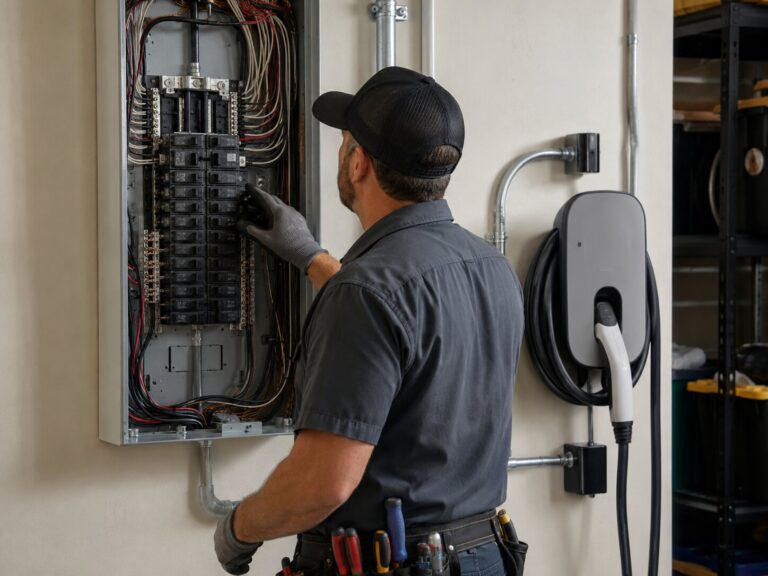
Can You Install an EV Charger on a 100-Amp Panel?
Yes, an EV charger can sometimes be installed on a 100-amp panel, but it depends on the home’s existing electrical demand and the charger setup.
Some 100-amp homes can support Level 2 charging with the right load calculation, charger setting, or load management equipment. Other homes cannot safely add the charger without reducing demand, changing the charging plan, or upgrading the service.
This is where assumptions can become expensive. A homeowner may buy a high-powered charger, then find out the existing panel cannot support it at full output. In many cases, the better move is to check the panel first, then choose the charger.
Whether a Service Upgrade Is Required
A service upgrade may be required when the existing electrical service cannot safely support the new EV charging load. This is more common when the home already has several large electrical loads or when the service is older.
A service upgrade is different from simply installing a charger. It may involve the panel, meter base, grounding, service conductors, utility coordination, permits, and inspections.
Not every EV charger project needs a service upgrade. Load management may help some homeowners avoid a larger upgrade by controlling when or how much power the charger uses.
For homes in Innisfil and surrounding Simcoe County communities, garage layout, lake-area properties, outdoor parking, and existing service size can all affect the installation plan. Our electricians in Innisfil can review those site conditions before the charger location is finalized.
Indoor Versus Outdoor Installation
EV charger installation in a garage is often straightforward when the panel is nearby and the wall is accessible. The charger is protected from weather, the cord can stay organized, and the vehicle can charge in a controlled area.
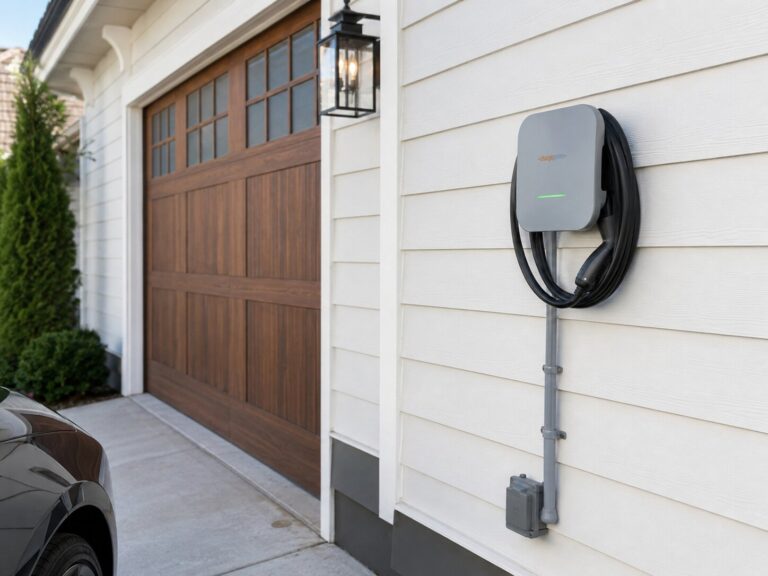
Outdoor installation is also possible, but it needs the right equipment and installation method. The charger must be rated for outdoor use, and the wiring must be protected from weather, impact, moisture, and temperature changes.
Driveway layout matters. Snow clearing, cord reach, charger height, parking habits, and exposure to rain or ice should all be considered before the charger is mounted.
For homes in Barrie, Orillia, Collingwood, and rural parts of Simcoe County, outdoor charger placement should be planned around real winter use, not just where the unit looks good on the wall. Our Orillia electricians [HYPERLINK HERE] can help assess placement when the charger is being installed outside or away from the main panel.
Permit and Inspection Requirements
Do you need a permit to install an EV charger? In Ontario, EV charger installations are electrical work and must follow Electrical Safety Authority requirements.
A proper installation includes more than mounting the charger. The circuit must be sized correctly, the wiring method must be approved, the breaker must match the installation, and the work must be completed in line with code.
Permits and inspections help confirm that the installation is safe and properly documented. This matters for homeowner safety, insurance, resale, and long-term reliability.
What Homeowners Can Safely Check
There are a few things homeowners can check without opening the panel or touching wiring.
Start by identifying which rooms, outlets, lights, or appliances lost power. Unplug devices on that circuit, especially anything with heat, a motor, or visible damage. Reset the breaker once. If it holds, plug devices back in one at a time.
If one device causes the breaker to trip, stop using that device. If the breaker trips with nothing plugged in, the problem may be in the wiring, breaker, fixture, or connected equipment that is not easy to isolate.
Homeowners can also check for obvious warning signs such as burning smells, warm outlets, buzzing sounds, flickering lights, cracked outlet covers, or moisture near electrical equipment.
Do not remove outlet covers, open junction boxes, remove the panel cover, or attempt wiring repairs without proper licensing.
Little Tip: Plan the Installation Before the Vehicle Arrives
Many homeowners wait until the EV is in the driveway before booking the charger installation. Planning earlier gives more time to review the panel, confirm the charger location, and avoid relying on slow temporary charging.
Installation Timeline
A simple EV charger installation can often be completed in one visit once the assessment, quote, and permit process are in place. More involved installations can take longer if the wire route is complex, outdoor work is required, or panel upgrades are needed.
The timeline depends on access, materials, scheduling, inspection requirements, and whether the existing electrical system is ready for the new load.
If a service upgrade is needed, the project can take longer because utility coordination and inspection timing may be involved. Detached garages, trenching, finished basements, or long wire runs can also add time.
Why Installation Should Be Completed by a Licensed Electrical Contractor
A Level 2 EV charger is a continuous electrical load. It may run for hours at a time, often overnight, and it has to be installed with the correct circuit, wiring, breaker, grounding, and protection.
This is not the type of work to leave to guesswork. An undersized wire, incorrect breaker, poor connection, or unapproved installation can create heat, nuisance tripping, equipment damage, or fire risk.
A Licensed Electrical Contractor can assess the panel, complete the installation properly, arrange permit requirements, and make sure the charger is safe for regular use.
For EV charger installation in Barrie and Simcoe County, we look at the whole setup before recommending the next step. Our CMi Electric quote request page is the place to start when the goal is a safe charger installation that fits the property.
Frequently Asked Questions
The cost depends on the charger type, distance from the panel, panel capacity, indoor or outdoor placement, permit requirements, and whether upgrades are needed. A simple installation is usually much less than a project requiring a service upgrade or long wire run.
Yes, an EV charger can be installed outside when the charger is rated for outdoor use and the wiring is installed correctly. Weather exposure, snow, cord reach, and protection from damage should all be considered.
Sometimes. A 100-amp panel must be reviewed before installation. Load management or a lower charger output may work in some homes, while others may need a service upgrade.
In Ontario, EV charger installation must follow ESA requirements. Permit and inspection requirements apply because the charger is connected to the home’s electrical system.
Get the Right EV Charger Setup for Your Home
EV charger installation cost depends on the property. The charger, panel, wire route, service capacity, installation location, and permit requirements all affect the final scope.
The best installation is the one that fits how the vehicle is used and how the home is wired. A proper assessment helps prevent unsafe shortcuts, nuisance tripping, and unexpected upgrade costs.
When we install an EV charger, we look at the electrical system first so the charger can be used safely every day.