
Electric motors are changing how people drive, work, and plan their electrical needs at home. For drivers in Barrie and Simcoe County, understanding how an electric engine works also helps explain why EV charging setup matters so much.
An electric engine does not burn fuel to create motion. It uses electricity stored in a battery to power an electric motor, which turns the wheels.
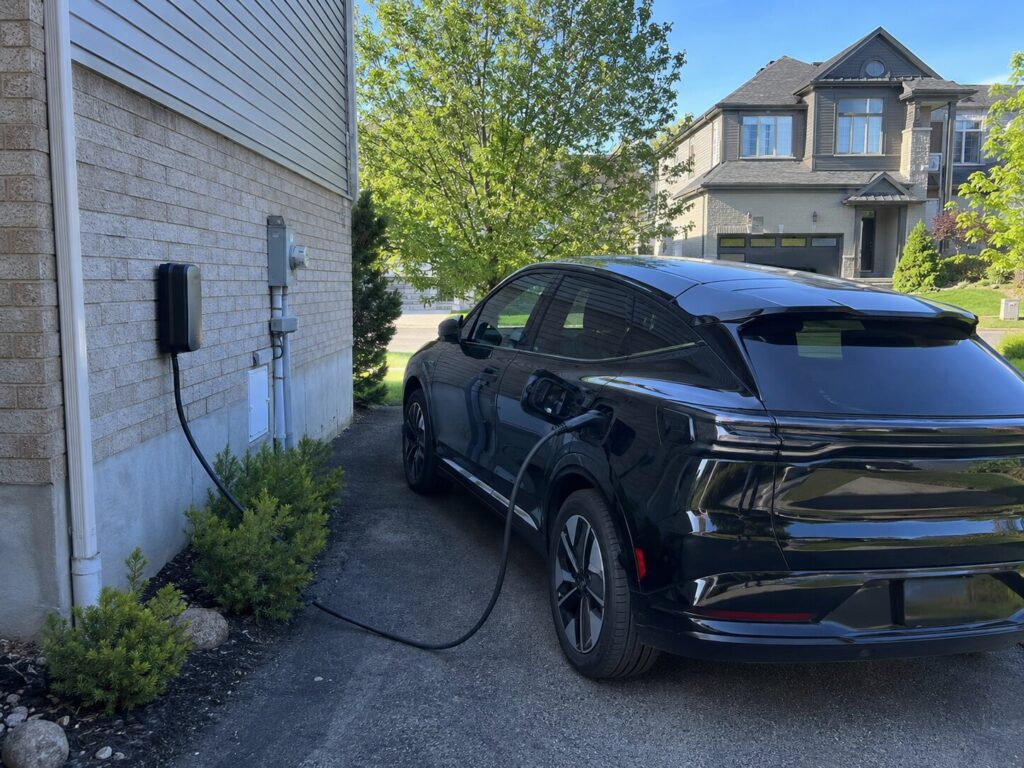
The Simple Version: Electricity Creates Motion
An electric motor works by using magnetic force. Electricity flows from the vehicle’s battery into the electric motor. Inside the motor, that electricity creates a magnetic field.
That magnetic field pushes against another magnetic field inside the motor. The result is rotation. That rotation is sent to the wheels, which moves the vehicle.
This is why electric vehicles feel different from gas vehicles. There is no fuel combustion, no exhaust, and no traditional engine cycle. Power is delivered quickly because the motor can produce torque almost instantly.
For homeowners planning EV ownership, charging speed and electrical capacity matter just as much as the vehicle itself. Our electric vehicle chargers in Barrie are installed with the home’s panel, charging needs, and daily driving habits in mind.
Electric Motor vs Gas Engine
A gas engine creates motion by burning fuel inside cylinders. The combustion process moves pistons, which turn a crankshaft, which sends power through the drivetrain.
An electric motor works with fewer moving parts. The battery sends electricity to the motor, and the motor creates rotation directly.
The difference is easier to see when comparing the two systems:
- Gas engine: Burns fuel, creates heat, moves pistons, produces exhaust.
- Electric motor: Uses stored electricity, creates magnetic force, turns the motor shaft.
- Hybrid system: Uses both a gas engine and an electric motor, depending on design.
Because electric motors do not rely on combustion, they can be quieter, smoother, and more responsive. They still need a reliable charging setup, especially for drivers who want the vehicle ready every morning.
Little Tip: “Electric Engine” Usually Means Electric Motor
Many people say electric engine when talking about an EV. Technically, the main drive component is an electric motor. The battery stores the energy, and the motor turns that energy into movement.
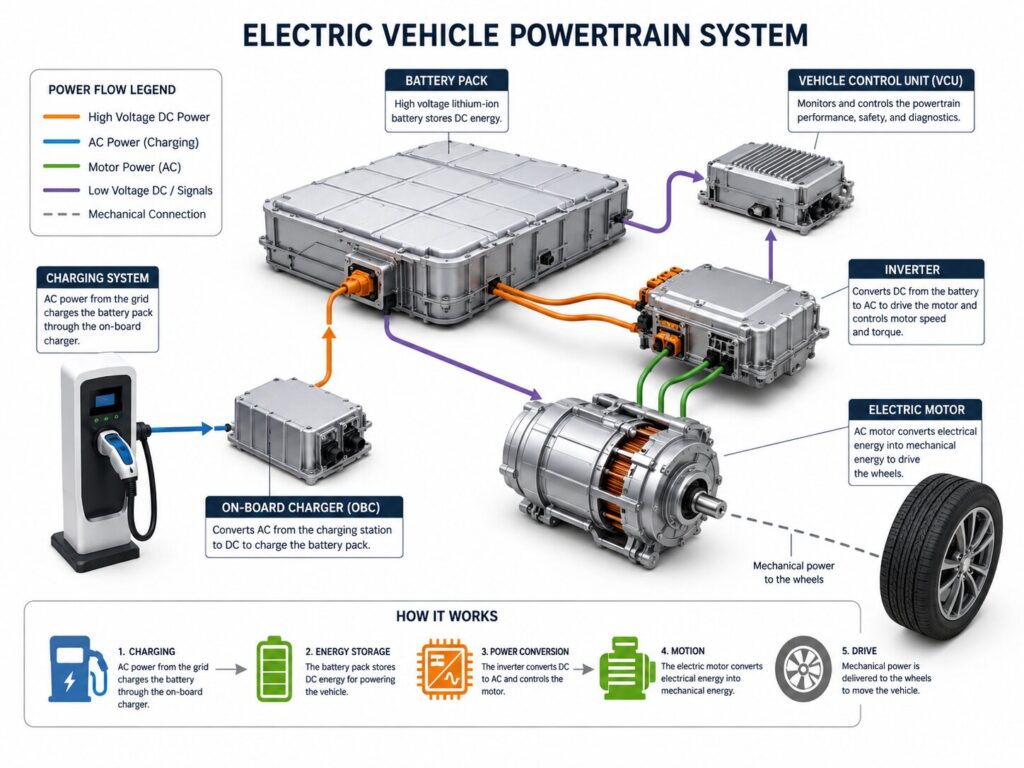
The Main Parts of an Electric Vehicle Power System
An electric vehicle is built around a few major systems. The motor gets most of the attention, but the full power system includes several important components.
The main parts usually include:
- Battery pack: Stores electrical energy.
- Electric motor: Converts electricity into motion.
- Inverter: Converts battery power into the type of power the motor needs.
- Charging port: Connects the vehicle to a charger.
- Onboard charger: Controls how AC power from the charger enters the battery.
- Thermal system: Helps manage battery and motor temperature.
The battery does not send power straight to the wheels on its own. It sends electricity through power electronics that control speed, torque, and efficiency.
Charging also depends on the vehicle and the home setup. We explain the charging side in more detail in our guide to types of electric vehicle chargers, especially for drivers comparing Level 1, Level 2, and DC fast charging.
How the Battery Powers the Motor
The battery pack stores energy as direct current, also called DC power. Most electric vehicle motors use alternating current, or AC power. The inverter converts DC power from the battery into AC power for the motor.
Once the motor receives controlled power from the inverter, the motor’s magnetic field changes rapidly. These magnetic changes create rotation.
The vehicle’s control system adjusts power constantly. When the driver presses the accelerator, more power is sent to the motor. When the driver eases off, power is reduced.
In many EVs, the motor can also help slow the vehicle down while sending some energy back into the battery. This is called regenerative braking.
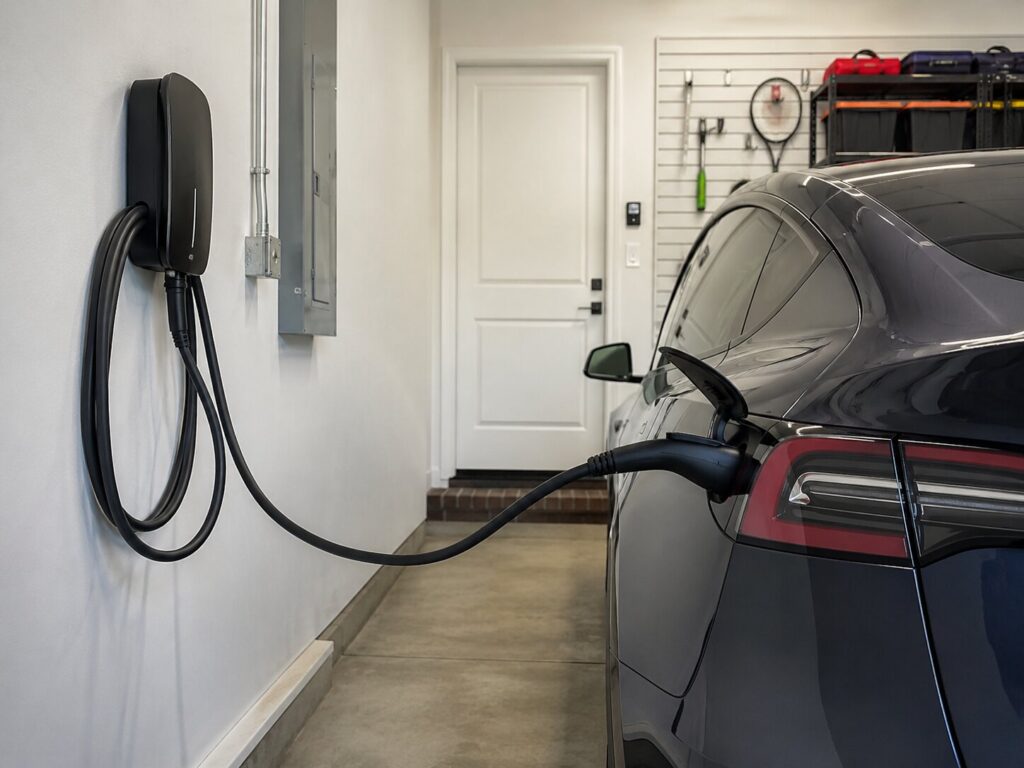
Code Tip: Charging Equipment Still Needs Proper Electrical Work
Even though the vehicle handles the motor and battery system, the home charging circuit is part of the property’s electrical system. In Ontario, EV charger installations must follow Electrical Safety Authority requirements. Dedicated circuits, permits, breaker sizing, wiring, and inspection requirements all matter.
What Regenerative Braking Does
Regenerative braking is one of the biggest differences between electric vehicles and gas vehicles. In a gas vehicle, braking turns motion into heat through the brake system.
In an electric vehicle, the motor can work in reverse during slowing. Instead of using electricity to create motion, it uses motion to generate electricity. Some of that energy returns to the battery.
Regenerative braking does not replace the regular brakes completely. The vehicle still has a braking system. It simply helps recover energy that would otherwise be lost as heat.
This is one reason electric vehicles can be efficient in city driving. Stop-and-go traffic allows the vehicle to recover energy more often.
Why Electric Motors Deliver Power So Quickly
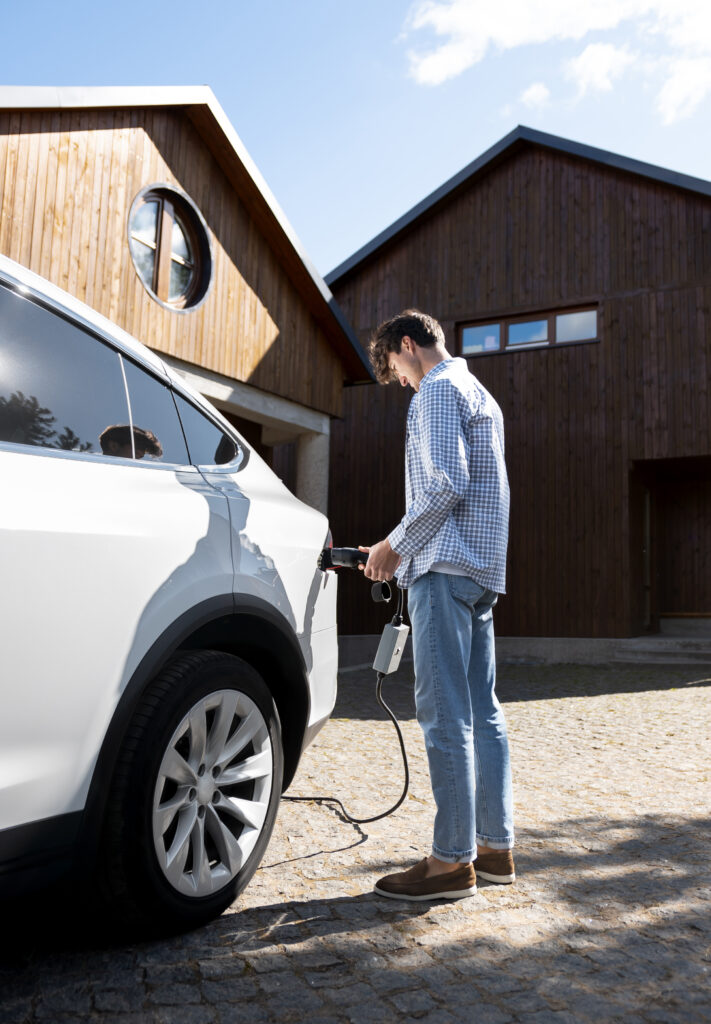
Electric motors can create strong torque at low speeds. Torque is the twisting force that gets the vehicle moving.
A gas engine usually needs to build RPM before it reaches its best power range. An electric motor can respond almost immediately. This is why many electric vehicles feel quick from a stop.
That instant response is controlled by the vehicle’s power electronics. The system decides how much electricity to send to the motor based on driver input, traction, battery condition, and temperature.
For homeowners in Barrie, that fast vehicle performance often leads to a practical question: how fast can the vehicle recharge at home? In many cases, a Level 2 charger gives the best daily ownership experience when installed on a suitable dedicated circuit.
Why Home Electrical Capacity Matters
An electric engine depends on the vehicle battery, and the battery depends on charging. That makes the home electrical system part of the ownership experience.
Level 1 charging uses a standard household outlet. It is slow, but it may work for light driving. Level 2 charging uses a 240-volt circuit and charges much faster.
Before installing a Level 2 charger, the panel needs to be reviewed. Some homes have enough available capacity. Others may need load management or electrical upgrades.
Older properties in Barrie may also have wiring or panel conditions that should be corrected before adding major new electrical loads. When the home electrical system needs attention first, our Barrie home rewiring service can help prepare the property for safer long-term use.
Electric Motor in Cold Weather
Cold weather affects electric vehicles differently than gas vehicles. Batteries can lose range in low temperatures because chemical reactions slow down. Heating the cabin also uses energy.
That does not mean electric vehicles cannot work well in Ontario. It means charging habits and home setup matter more during winter.
Drivers in Simcoe County often benefit from charging overnight at home, preconditioning the vehicle before driving, and keeping the battery in a comfortable range. A proper Level 2 charger can make winter EV ownership easier because the vehicle starts each day with a stronger charge.
Properties in Orillia, rural areas, and cottage communities may have different driving distances and charging habits than homes in central Barrie. Our Orillia electrician’s service can review the panel, charger location, and electrical setup before installation.
Local Tip: Think About Daily Distance
A short daily commute may work with a slower charging setup. Longer drives across Barrie, Orillia, Innisfil, Collingwood, or rural Simcoe County usually make Level 2 charging more practical.
Do Electric Motor Need Less Maintenance?
Electric motors usually have fewer moving parts than gas engines. There are no spark plugs, oil changes, timing belts, or exhaust systems tied to the motor itself.
That can reduce some maintenance, but it does not make the vehicle maintenance-free. EVs still have tires, brakes, suspension, coolant systems, cabin filters, and battery systems that need care.
The electrical side also needs proper planning. A charger should not be treated like a regular plug-in appliance when it draws a continuous load for hours. A dedicated circuit, correct wiring, and proper installation help protect both the charger and the property.
For homeowners in Innisfil and nearby communities, our electricians in Innisfil can help plan EV charger placement for garages, driveways, and lake-area properties where access and weather exposure matter.
Frequently Asked Questions
In everyday conversation, yes. Technically, an electric vehicle uses an electric motor, not a combustion engine. The motor converts electricity into motion.
The vehicle battery stores electrical energy. Power electronics send controlled electricity from the battery to the motor when the driver accelerates.
The battery stores DC power. Many EV motors use AC power, so an inverter converts battery power into the type of power the motor needs.
Ready to Prepare Your Home for Electric Driving?
Electric motor work by using electricity, magnetic force, and motor rotation instead of combustion. The vehicle handles that process internally, but the charging setup at home affects daily convenience.
A properly installed charger makes EV ownership easier, especially during winter, longer commutes, and regular daily driving.
For homeowners and businesses planning EV charging in Barrie or Simcoe County, the best next step is a site-specific electrical review through our CMi Electric quote request page.